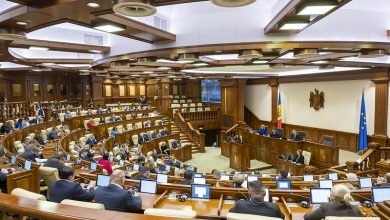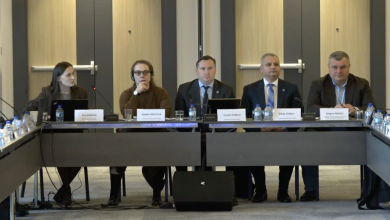
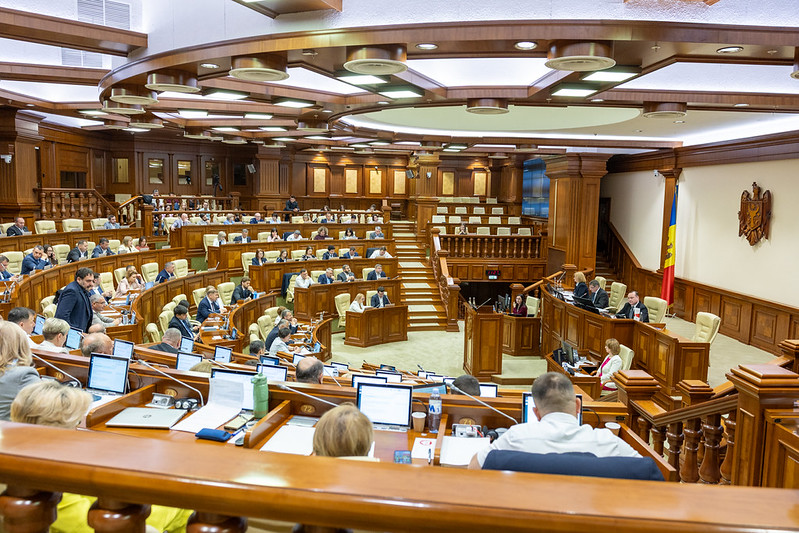
The draft new media law was passed by Parliament at first reading, with the support of 53 MPs. Through this updated legal framework, the authorities aim to adapt the rules governing the media sector to recent developments and promise to bring it into line with European standards on press freedom, media pluralism and transparency of media ownership.
During the plenary debates, MP Liliana Nicolaescu-Onofrei presented the bill as “the result of a considerable effort” by several MPs and media experts, with input from representatives of the Ministry of Culture and the Audiovisual Council. She outlined the main provisions of the bill, which aim to define several concepts relevant to the sector, strengthen the protection of journalists, establish a register of media service providers, reinforce safeguards regarding the editorial independence of the press, clarify the roles of the authorities involved in the sector, ensuring transparency regarding sources of funding and ownership, and promoting self-regulatory mechanisms. “Thus, the law aims to ensure a more transparent, fair and democratic functioning of the media market in the Republic of Moldova,” according to the chair of the parliamentary committee on media.
She was keen to point out that “under no circumstances does this draft law create mechanisms for censorship or editorial control, nor does it grant public institutions any powers that would interfere with the activities of the media”.
Several MPs asked for clarification on issues such as the future register of media organisations, the lack of a definition of manifestly illegal content, the procedure for accrediting journalists at events of public interest, the protection of children and adolescents, and combating hate speech. When asked how this law would help to increase public trust in media organisations, Liliana Nicolaescu-Onofrei highlighted two aspects: increasing transparency regarding the funding and ownership of media organisations, and ensuring journalistic quality through the self-regulatory mechanisms promoted by this draft law.
In her speech, Adela Răileanu, representative of the Party of Socialists, acknowledged that the Republic of Moldova needs a new media law, and that the draft contains important and necessary provisions; however, in her view, the problem lies not with the stated aim of the law, but with the way in which certain provisions are worded and are to be implemented. “For example, the draft law establishes a register of media service providers. Although registration is voluntary, it becomes a condition for survival, as the media’s access to subsidies and public funding depends directly on this register. In practice, a ministry headed by a politically appointed official will decide who is compliant and deserves subsidies and who does not,” according to the MP. Furthermore, she believes that the law risks establishing a two-tier system of control for television and radio stations, as they remain under the supervision and control of the Audiovisual Council, but “through the mechanisms of registration and application for subsidies, the Ministry of Culture also comes into play. (…) A system with two centres of influence is taking shape.” Adela Răileanu also raised objections regarding the role assigned to the Press Council: “Self-regulation implies the recognition and support of the entire journalistic profession, not just a small group of organisations.”
Other opposition MPs, including representatives of the ‘Our Party’ and ‘Alternative’ factions, also referred to potential risks of censorship and interference, or ‘levers to keep the press under control, under the guise of European values’.
On the other hand, Marcela Adam, an MP for the Action and Solidarity Party, insisted that this was about more than simply regulating a sector; rather, it was a law that would ensure “every citizen’s right to be accurately informed, freedom of the press, and the accountability of those who claim to be in the media”. “Information security is part of national security; we cannot cling to rules written for a world that no longer exists, nor can we defend 21st-century democracy with the tools of the last century. The new law establishes clear and modern rules. It is a law that recognises technological changes and provides tools for the development of a healthy, pluralistic and resilient media ecosystem,” said the MP.
WHAT THE LAW PROVIDES FOR
Media Azi previously reported that the bill was tabled in Parliament in mid-April, with a new law being necessary in light of the significant developments in the sector in recent years. The Press Act, which remained in force until recently, was adopted in the early 1990s, when the media landscape was dominated by the print media. “Technological developments and the transformation of how information is produced and distributed have created new challenges for the independent operation of media organisations. The growing role of digital platforms and other online intermediaries in the distribution of journalistic content, as well as structural changes in the media market, highlight the need to strengthen safeguards regarding editorial independence and the protection of journalistic activity against unjustified interference. “In the face of these changes, the current legislative framework does not ensure effective regulation”, the explanatory memorandum states.
It is also necessary to align the national regulatory framework with European standards on press freedom, media pluralism and transparency of media ownership. Thus, the draft partially transposes provisions from Regulation (EU) 2024/1083, which establishes common rules for media services in the European Union, aimed at protecting editorial independence, ensuring transparency of ownership, protecting journalistic sources and assessing media concentration.
The initiative clearly states that the state must guarantee the media’s freedom of expression and that no one may prohibit or prevent the dissemination of information of public interest except in accordance with the law. “The editorial independence of media service providers is recognised and guaranteed by law. Censorship, in any form, is prohibited,” the bill stipulates. Furthermore, “coercion, intimidation or the exertion of any pressure on a journalist with the aim of influencing journalistic activity shall entail administrative or criminal liability, as appropriate, in accordance with the law”.
At the same time, according to the text of the law, “media service providers are obliged to ensure transparency regarding their ownership structure and sources of funding”.
With regard to the safety of journalists, the draft legislation provides for their protection and safety, particularly in the context of acts of war, conflicts, protests and demonstrations of any kind.
The draft bill introduces a set of new provisions. Firstly, it defines the key concepts relevant to the field, such as media pluralism, editorial responsibility, media service providers and media market concentrations. The law also introduces an explicit definition of ‘disinformation’, aimed at combating false or misleading information that may cause public harm, an issue of direct relevance to the rapid circulation of digital content.
It also provides for the establishment of a register of media service providers, which would be managed by the Ministry of Culture and, according to the drafters, be ‘voluntary in nature’. This would be intended for the administrative record-keeping of media service providers and to facilitate public access to information regarding the ownership structure and main sources of funding of media organisations. The authorities also aim to clarify the roles of public institutions involved in the media sector, in particular the Ministry of Culture, the Audiovisual Council and the Competition Council.
At the same time, regulations for the online environment and the digital space are set out. The text defines, for the first time, the concept of an ‘online platform’ as a hosting service that stores and disseminates information to the public, thereby extending the traditional legal framework for the press to the digital environment. Furthermore, editorial responsibility is clarified by including an obligation to continuously verify content generated using artificial intelligence tools. The draft also sets out rules to ensure transparency regarding the ownership structure and sources of funding for media service providers, including those operating online, and strengthens the protection of the rights to privacy and personal data.
The drafters state that the draft law was submitted for review to the European Commission for Democracy through Law (the Venice Commission) and the Council of Europe, and that the recommendations were incorporated “to the extent that they are compatible with the structure of the national regulatory framework and with the public policy objectives pursued by the draft”. At the end of May, the document was also endorsed by the Government.