Findings of the Ombudsman of the Republic of Moldova on freedom of expression and access to information in 2025
Mihaela Ciobanu

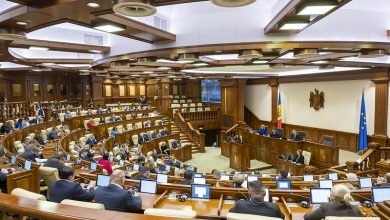
In 2025, the Republic of Moldova experienced a year marked by significant legislative changes in the field of freedom of expression, as well as worrying incidents targeting the press and persistent difficulties in implementing the law on access to information of public interest. These are the main conclusions set out by the Ombudsman, Ceslav Panico, in the report on respect for human rights and fundamental freedoms in the Republic of Moldova in 2025, presented to Parliament on 4 June. The draft was supported by 61 MPs.
ALIGNMENT WITH EU LEGISLATION, BUT ALSO QUESTIONS
In the legislative sphere, the document highlights the draft law which formed the basis for the adoption of Law No. 121 of 10 July 2025 amending the Code on Audiovisual Media Services with a view to aligning the national legal framework with the acquis communautaire.
‘Whilst the efforts to harmonise the national legal framework with EU standards in the field of audiovisual media are appreciated, the Ombudsman has made recommendations to improve the draft law, focusing on the clarity and predictability of the terms used, editorial independence and creative freedom, the protection of journalistic sources and confidential communications, illegal and harmful audiovisual content, ensuring public information, the protection of people with disabilities, the safeguarding of the national audiovisual landscape, the composition of the Supervisory and Development Council, the members of the Audiovisual Council, and the application of sanctions”, the report states.
At the same time, the analysis highlights a government directive concerning the blocking of access to websites used for the preparation or commission of offences. The Ombudsman warned that this “must not infringe upon fundamental rights and freedoms, in particular freedom of expression”. According to him, blocking should only be used as a “last resort” (from Latin, n.r.), prioritising the removal of illegal content rather than blocking the entire website.
PRESSURE ON JOURNALISTS IN AN ELECTION YEAR
One of the most alarming findings concerns the situation of the press in the context of the parliamentary elections. The Ombudsman has monitored “with concern an escalation in cases of intimidation, harassment and threats against journalists and other media figures”, with multiple incidents in which political representatives have resorted to “denigration, verbal attacks or pressure on the press”. The Ombudsman describes these actions as “serious attacks that undermine democratic principles”, recalling that the state has a duty to guarantee a safe environment for the exercise of freedom of expression and that the press has a legitimate right to monitor the activities of the authorities.
ACCESS TO INFORMATION: A MODERN LAW, BUT INADEQUATE IMPLEMENTATION
The Ombudsman notes that, although the law on access to information of public interest has established a regulatory framework in line with European standards, its implementation remains hampered by practical shortcomings and an “insufficient level of awareness of the legal provisions” — both amongst the public and the authorities. The main problem identified is the confusion between the right of access to information and the right to petition, alongside the misinterpretation of grounds for refusal and the lack of proactive publication of data.
To remedy these shortcomings, the Ombudsman “emphasises the need to direct petitioners to the competent authorities and to train public sector staff to handle requests correctly and in a timely manner”.
FREEDOM OF EXPRESSION, SUPPRESSED IN THE TRANSNISTRIA REGION
At the same time, the report indicates that, in the Transnistrian region, freedom of expression remains severely restricted by the so-called ‘RMN Information Security Doctrine 2020–2026’, approved by a ‘decree’ issued by the leader in Tiraspol, Vadim Krasnoselski. The document is used by the unconstitutional authorities to restrict access to alternative information and to silence critical views, citing pretexts such as information security and the prevention of extremism.
“The application of this doctrine endangers civil society representatives, human rights defenders, freedom of expression, freedom of the press, the right to assembly, and the legalisation of censorship, etc.,” notes the Ombudsman.
THE OMBUDSMAN’S RECOMMENDATIONS
Following the findings regarding freedom of expression, the Ombudsman recommends that the Audiovisual Council ensure media pluralism, editorial independence and the proportionate application of sanctions in the field of audiovisual media services, and that the Government review the mechanisms for blocking online content, ensuring strict compliance with the principles of legality, necessity and proportionality, with blocking being used exclusively as a measure of last resort.
With regard to access to information of public interest, the Ombudsman makes two recommendations to the State Chancellery: to develop public awareness campaigns for citizens on the right of access to information and how it differs from the right to petition.