MFRR: 736 press freedom violations in Europe in the first half of the year. How many cases concern Moldova
Victoria Dodon
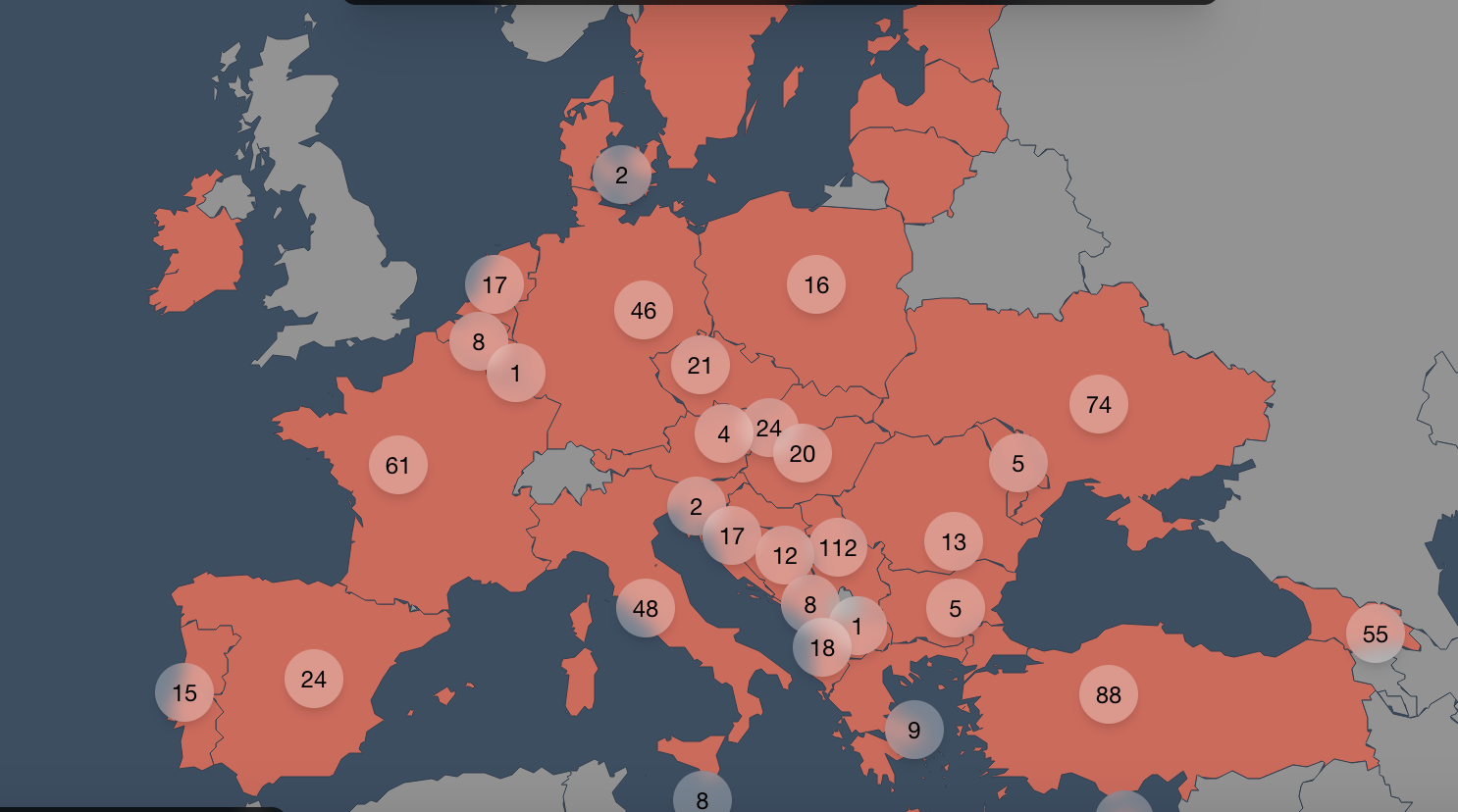
In the first half of this year, 736 attacks and violations of press freedom were documented by the Media Freedom Rapid Response (MFRR) in the Member States of the European Union and candidate countries. These affected 1,174 journalists and other media professionals. Harassment and smear campaigns, threats and obstruction of journalistic work are among the most common forms of pressure reported in the interim monitoring report, published by the MFRR. Five cases concern the Republic of Moldova.
According to the data collected, 363 of the incidents took place in EU Member States, and a further 373 in candidate countries. The authors of the monitoring report note that journalists and media organisations have faced a wide range of abuses: from death threats and physical assaults to attacks on journalists’ property and data, obstruction of their professional work, and legal action.
The most common category of incidents was insults, harassment and attempts to discredit – 212 cases, or 28.8 per cent of all alerts monitored. These were followed by threats – 155 cases (21.1 per cent) and obstruction of journalistic work – 126 cases (17.1 per cent). At the same time, 55 physical assaults, 47 cases of arrest, detention or imprisonment, and 38 physical assaults resulting in injury were recorded.
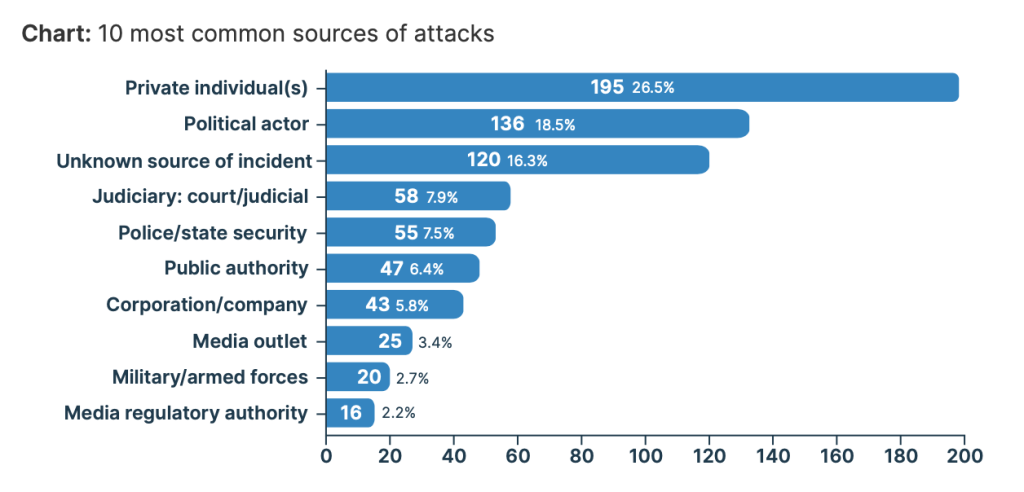
As regards the perpetrators of the attacks, most incidents were attributed to private individuals – 195 cases, or 26.5 per cent of the total. Political figures came second, with 136 cases, accounting for around 19 per cent of incidents documented across Europe. The proportion is even higher in EU Member States, where politicians are responsible for around a quarter of the attacks. In most cases, they threatened, insulted or discredited journalists, but the report also records physical assaults, legal proceedings and actions that hindered journalistic work.
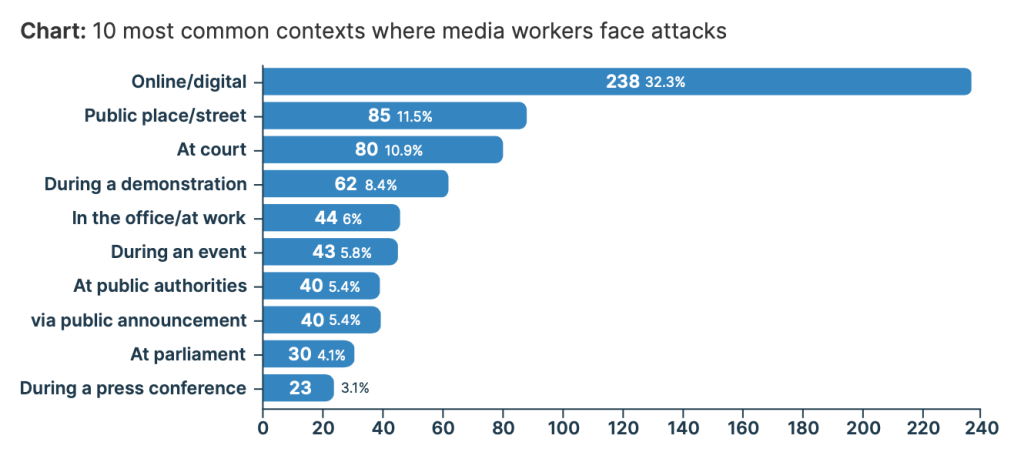
THE ONLINE ENVIRONMENT: THE MAIN ARENA FOR ATTACKS
A third of the incidents monitored took place in the online or digital environment, the report shows, making this the most common context in which journalists are subjected to attacks. These mainly involve harassment, insults, attempts to discredit and threats, including death threats. At the same time, attacks on journalistic data take the form of hacking, digital identity theft, the unlawful publication of personal data or surveillance. The perpetrators often remain unknown, which complicates investigations and efforts to hold them to account, experts point out.
The report draws particular attention to the arrest and detention of journalists. In the first six months of the year, 47 cases involving 61 journalists were documented. Of these, 42 cases (around 89 per cent) took place in Turkey. In 30 instances, journalists were detained or arrested in connection with their coverage of protests or posts on social media, with charges of disinformation being levelled in some cases. A further 12 cases resulted in prison sentences for 15 journalists, totalling at least 32 years’ imprisonment.
Another trend highlighted by the MFRR is the adoption or drafting of legislation that could affect press freedom. The source identified 11 problematic legislative developments, relating, amongst other things, to external funding, the independence of public service media, access to information and the surveillance of journalists. Examples include new restrictions on external funding in Georgia, similar initiatives in the Czech Republic and Romania, as well as changes that have raised questions about the independence of media regulators or the funding of public service broadcasters in Slovakia and the Czech Republic.
The report also highlights the impact of the war in Ukraine on media infrastructure. During the period analysed, nine cases were recorded of bombings, artillery attacks or arson targeting media organisations or their infrastructure in Ukraine.
The MFRR also warns of the increasing vulnerability of journalistic data. Seventeen attempts to seize, access or destroy data were documented, including six cases in which journalists were pressured or coerced into revealing their confidential sources. The perpetrators of the attacks have also resorted to identity theft against journalists, including by replicating their visual identity using artificial intelligence, to spread false information, as well as to the publication of their personal data.
DOCUMENTED INCIDENTS IN THE REPUBLIC OF MOLDOVA
According to the data, five incidents were documented by the platform in the Republic of Moldova during the monitoring period. Most of the cases were reported and condemned by the Centre for Independent Journalism (CJI) and other non-governmental media organisations.
For example, on 17 February, the politician Igor Dodon behaved in a manner deemed degrading and intimidating towards the journalists Camelia Ciornocan of TV8 and Doina Onofrei of Cu Sens, whilst they were approaching him with questions after a court hearing.
On 24 March, TV8 journalist Viorica Tătaru was the target of insults, degrading comments and threats posted on Facebook and Telegram, including from accounts which, according to the CJI, showed signs of coordinated or inauthentic behaviour. A few weeks later, journalist Vitalie Călugăreanu was threatened and insulted by a Facebook user who had previously sent messages containing insults and death threats to TV8 journalist Mariana Rață as well.
Another case, recorded on 23 April, involved several journalists, media representatives and civil society figures, after the National Alternative Movement (MAN) Party published a collage in which they were portrayed as part of an alleged ‘PAS/Media octopus’, a move described by the IJC as an attempt at public discrediting and intimidation. The fifth incident was reported in June by the RISE Moldova team: an unidentified individual used the identity of journalist Vladimir Thorik for several months – including a photograph generated using artificial intelligence and a fake press card – to contact representatives of the Belarusian opposition and obtain information from them.
Media Freedom Rapid Response is a European mechanism that monitors and responds to violations of press and media freedom in EU Member States and candidate countries. The project is co-funded by the European Commission and implemented by a consortium coordinated by the European Centre for Press and Media Freedom (ECPMF), comprising organisations such as Article 19, the European Federation of Journalists (EFJ), the International Press Institute (IPI) and others. The Mapping Media Freedom database, which documents violations of press freedom in Europe, forms part of the MFRR.