Journalism in Moldova is not in a crisis of ideas, but in a crisis of people
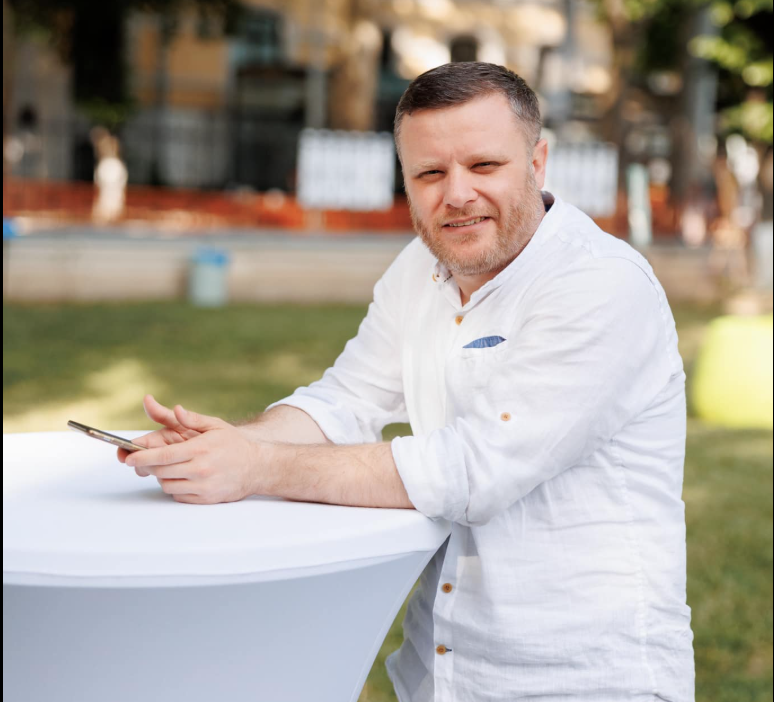
Victor Gotisan, media researcher
Along with the chronic funding crisis, the press in the Republic of Moldova also faces another structural issue: the lack of qualified personnel. This is an equally serious challenge, which slows down the development of the media sector. One of the most recent studies by the Centre for Independent Journalism (CIJ) – focused on the media needs – reconfirms a reality: editorial offices continue to face a personnel crisis, their teams are increasingly overworked, and the demand for labour is increasingly acute. The causes are multiple: from low salaries (an frequently invoked argument, but though not sufficient on its own), to the decreasing attractiveness of the profession, and growing competition from related industries – such as communication or public relations – which absorb more and more journalists. All this is supplemented by the fact that journalism faculties have meanwhile become less popular and are struggling to motivate and inspire young people to choose studies in this field.
What can we do? Perhaps, a first step would be to restore the prestige of this profession, especially after it has recently become increasingly attacked and intimidated, partly due to certain ‘models’ of ‘journalists’ who discredit the profession. And, perhaps, not least, to invest in people.
But let’s take it step by step…
What do we have at the moment? Or the conclusions of a needs study from which we begin
A study conducted in May 2025 by Magenta Consulting for the CIJ highlights the personnel crisis in the sector. Almost half of the surveyed media institutions (47%) report they urgently need new hires, both for current work and to expand their activity. At first glance, this is a slight improvement compared to 2021, when 59% reported the same need. But this ‘decrease’ is misleading. In reality, editorial offices have learned to cope with fewer people or have accepted the idea that, even if they have vacancies, there are simply no candidates available. In other words, they have adapted to a situation, while the problem still remains unchanged.
The same research shows that 23% of editorial offices are looking for people for development purposes, and 14% are trying to fill vacancies in their daily activities. In short: the Moldovan press continues to operate at the limit. In many cases, editorial teams are extremely small – between two and six people – or even consist of just one person. What does this mean? Less content, more copy-paste, slower reaction to events of public interest and an increasing difficulty in maintaining editorial quality.
The difficulty of attracting journalists is a problem. The reasons are known to all of us: uncompetitive salaries compared to other sectors, instability in the field, and limited opportunities for professional training. In addition, ‘communication’ appears – i.e. public relations, marketing or social media industry has become an increasingly attractive alternative for those working in journalism or leaving it. Why? Simply; better salaries, more predictable schedules, and lower risks. In short, a ‘safer’ professional path.
This trend also deeply influences the status of the editorial office as a professional space. However, belonging to a media institution is no longer seen as the only way to practice journalism. Today, the online space offers the freedom to write, film and create content without intermediaries – without an editor or producer, without an editorial office behind. This is a freedom that can be productive, but which, at the same time, fragments the idea of institutionalized journalism and endangers the sustainability of traditional editorial offices.
Freelancers, bloggers or content creators are, of course, absolutely necessary – they are a form of media content production. However, it remains debatable whether it can be equated with journalism in its classical sense, where there are rules, editorial responsibility, verification of information and the credibility from professional affiliation. There is also something else that needs to be mentioned: the paradigm shift in journalism, where the journalist has become an orchestra person (universal journalist), who writes, films, edits, posts, moderates, does fundraising.
Returning to the problem of staffing shortage highlighted by the published study, it must be said clearly: the crisis affects not only the editorial area. More and more media outlets report a lack of marketing, sales and project management specialists – people without whom, in today’s independent journalism, developing innovative media products, attracting funding or promoting content becomes impossible. In other words, it is not just about content, but about the very economic survival of editorial offices. The CIJ study data confirms this. The most sought-after positions in the media are still advertising agents and reporters (both mentioned by 54% of respondents), followed by social media managers (38%), video editors (29%) and cameramen (27%).
Why did we get here?
The media staffing crisis did not emerge overnight. It is the result of a combination of factors that, over time, have reduced the attractiveness of the journalism as a profession and discouraged new generations from entering or remaining in this field. First, journalism has become less competitive compared to other professions, both in terms of pay and career stability and predictability.
Secondly, journalism has undergone several conceptual paradigm shifts. In short, anyone can now call themselves a journalist, without belonging to a particular institution (in other words, the institutionalization element of the profession has disappeared), and this is coupled by the failure to assume responsibility for what is written or mentioned in a certain content.
Thirdly, the low salaries, invoked by many journalists, and the economic instability of editorial offices have made more and more of them join fields that are usually better paid and less stressful. Here we face strong competition from the fields of communications and public relations – ‘fashionable’ and rapidly developing fields, where not only are salaries higher, but the demands for constant emotional or physical involvement are significantly lower. In practice, many of the skills required in the media are transferable, and young people prefer to use them in a more predictable and comfortable environment.
Journalism is a profession that requires a lot of dedication, curiosity, personal sacrifice, increased resistance to pressure and sometimes even giving up personal life. Not everyone is willing to accept and pay this price. It has become increasingly clear that in journalism ‘only those who really want join it, but only those who are able to stand, remain’. The problem is that few want to join, to try. On top of all this, journalists are among the most frequently attacked and intimidated professionals. Cases where media employees and institutions have compromised professional ethics have further damaged the authority and image of the profession, contributing to the erosion of trust in the profession and to its declining attractiveness among the younger generation.
Is journalism no longer sexy? Why?
Once a prestigious profession (NB. not that it is not now), journalism seems less and less attractive to new generations. Not because it has lost its relevance, but because it has become a profession that requires, first and foremost, dedication and often sacrifice of personal life. Today, with the same set of skills – writing, critical thinking, ability to access and analyze information – you can get a more stable and better-paid position elsewhere.
Journalism requires time, personal sacrifice, a strong dose of idealism, and the ability to withstand a financially unstable and emotionally stressful environment. What further complicates is that no formal certification is required to call oneself a journalist. Anyone can assume the title, and the missteps of ‘pseudo-journalists’ directly affect the overall image of those who do their job correctly and with dedication. In such circumstances, it is not surprising that many young people choose not to open the doors of media editorial offices, while those who do often stay only briefly or see this field as a stepping stone to other careers—better paid and less stressful. The truth is that journalism has not lost its charm, but it has become a difficult choice that fewer people are ready to assume.
The shift toward communication – a symptom, not a cause
An often-voiced observation is that more and more journalists are choosing to leave the media for other fields, usually communication and public relations. It is not difficult to understand why: more competitive salaries, a more balanced work pace, less public exposure, and generally less stress. For a professional who has been working under constant pressure for years, communication becomes a natural—even logical—alternative.
However, what we must point out is that migration to communication is not the cause, but rather a consequence of some challenges that the media faces: financial instability, widespread burnout, risks assumed almost daily, politicization of the sector or pressure from owners (yes, we still have it) and a kind of professional fatalism (or pessimism). In a way, communication has just filled a gap. It is not to blame for becoming more attractive. If journalism has become less attractive, perhaps it is time to acknowledge that a part of the responsibility lies with those inside. How do we make it ‘sexy’ again? This is the question we must answer together.
No replacement generation or we train too few and lose too many
Another major cause of the lack of staff in editorial offices is the educational system or, more precisely, a deep crisis of vocation for journalism among young people. Journalism faculties no longer attract young people as they used to. I remember, for example, that if in the 2000s there were promotions with five or six groups of journalism students, today there is barely one, or at most two. Journalism is no longer among the top career choices, neither as a passion nor as a financial prospect. Young people choose faculties that can offer them a more secure and better-paid job or fields where they don’t have to work on weekends or after 18.00.
All this is complemented by the perception that journalism is an ‘exhausting’ profession (the online mutation amplifies this ‘hypothesis’), which exhausts you, burns you emotionally and constantly exposes you to pressure and, sometimes, to risk. Many of those who choose to study journalism do not always end up practicing it. As a result, we face not only an exodus of trained journalists, but also a lack of new generations who consciously choose this profession. It is a trend that should make us all think: editorial offices, academia, civil society, and the state in general. If we want a professional, strong press, well grounded in ethical values, we must invest in educating new generations of journalists. Without a joint effort, the future of editorial offices is threatened by a professional void that is increasingly difficult to fill.
Credibility – a collective responsibility
One of the biggest losses of journalism in recent years is the level of credibility. Cases where media employees have abandoned ethical rules in favour of political agendas, collaborated with oligarchs, or knowingly spread false information continue to damage the profession, especially in terms of public trust. From ‘dealings’ with politicians to deliberate dissemination of misinformation, such actions have harmed not only the image of ‘certain journalists,’ but also the reputation of the entire profession.
Someone said that journalists are the ones who can take journalism to the heights of glory, but they are also the ones who can undermine it just as much. When the public can no longer distinguish between an honest professional and a politically affiliated figure, the profession loses its essence – credibility. Recovering credibility requires not only time, but also real solidarity among those who choose to remain upright even when the system is under pressure.
Instead of conclusions
The conclusions of the study conducted by the CIJ confirm a reality that is not new, but increasingly pressing: the press in the Republic of Moldova operates, in many cases, at the edge of professional survival. The staffing crisis in editorial offices is not only a human resources issue, but a systemic one, which reflects the declining attractiveness of the profession, migration of journalists to more stable fields and the level of trust in this field, which is slowly decreasing. It is important that this analysis be a starting point for a national discussion about the future of journalism – not only among journalists, but also among academia, authorities, civil society and development partners.
I don’t believe that there are simple solutions in this case, but I am absolutely convinced that they exist. First of all, we need to strategically invest in people, by supporting continuous professional training, to create decent working conditions and, most importantly, to invest in independent journalism. At the same time, vocational education in journalism must be reconsidered, in order to make young people see this profession not just as a hard job, but also as a necessary, honourable and worthy one to follow. And in this process, restoring the credibility of journalism and its social prestige is essential.
The article was written within the project “Resilient Media, Informed Voters: Safeguarding Moldova’s Elections from Disinformation”, funded by the Embassy of the Kingdom of the Netherlands in Moldova. The views expressed are those of the authors and do not necessarily reflect the position of the donor.