
Who needs a press agency in the age of social networks?
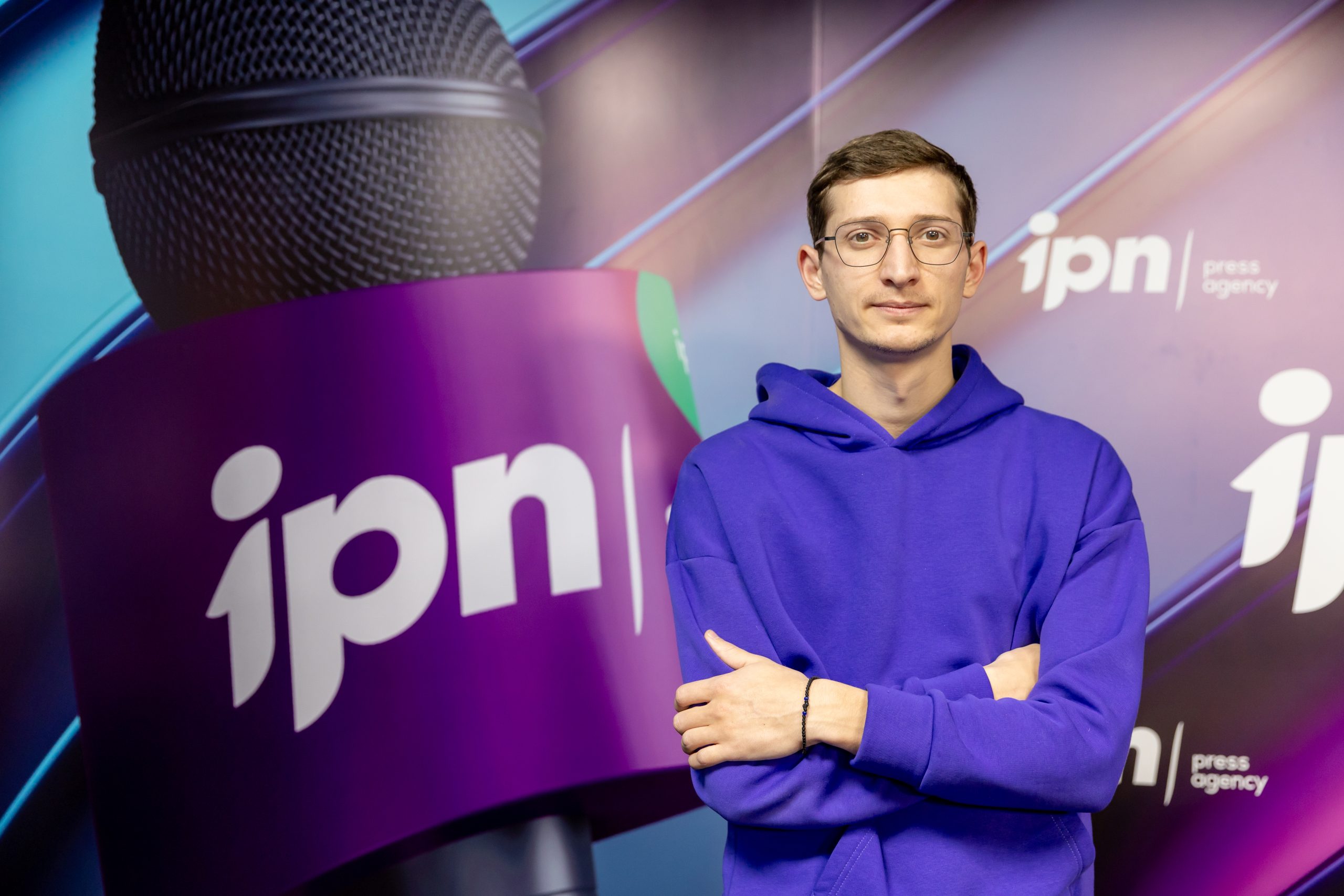
Denis Dermenji, director of IPN Agency
I have been in journalism for almost ten years. I have worked as a reporter and presenter, made video reports, managed social networks, collaborated with international media, worked as a fixer and seen news in its natural state – raw, uninteresting, unstructured, without studio lights and without the prospect of ‘going viral’. I have seen how a single headline can push a minister to resign, and how precise wording can stop panic. It is not about the romanticism of journalism, but about the daily mechanics known to any experienced journalist.
The answer to the question ‘why are press agencies still needed’ became a little clearer to me in 2024, when I took over the management of IPN Press Agency. In a world dominated by social networks, streaming and Telegram – where editorial offices can send a reporter to an event – a news agency seems like an anachronism. Yet this is precisely the essential difference: social networks spread information, while agencies spread facts. Agencies cannot afford to make mistakes, as can happen in a video from a Facebook or Instagram feed.
This difference is also visible in the economics of the profession. When, upon renewing a news subscription contract, I once heard from a local newsroom ‘It is more cost-effective for us to pay a few thousand dollars a year for a subscription than to maintain a reporter for $ 8,000-10,000 per year.’ The statement was both cynical and sincere. Cynical, because media outlets give up on hiring and developing reporters, yet remain comfortable with having someone who mostly copy-pastes already written news. This is where the problem of the shortage of journalistic staff becomes evident. The agency has become an infrastructure replacing a costly and vulnerable network of reporters. But, along with this, the agency has also assumed responsibility that does not directly belong to it.
Almost all embassies in the Republic of Moldova, ministries, mayor’s offices, banks, large companies, television and radio stations, news websites, Telegram channels and a lot of international organizations subscribe to IPN news. One mistake misleads not a few dozen readers, but thousands of decision-makers – from civil servants and diplomats to editors and bankers. And if the news is picked up by other media outlets, the impact of an error multiplies, sometimes even dozens of times.
A post on social networks can be deleted and forgotten. No apology is even required. But the agency lives with its archive, memory and reputation, built over decades and capable of being destroyed by a single careless paragraph.
That is why an agency is not just about ‘content’, but about a whole system: verification, sources, editorial filters and self-control. Here you cannot generate twenty news stories hoping that one will ‘catch on’. You cannot publish a text simply because it is attractive, if it is not confirmed. An error by a news agency is not an isolated incident, but a shock to the entire ecosystem created around it, one that is based on trust.
The paradox is that, at the same time, an agency must be fast: to be the first, to deliver only verified information and, at the same time, to remain relevant and interesting. We constantly think about how to work more efficiently, being present where others have either not yet thought to be or do not have the necessary resources. We will not attend routine court hearings – we will call the lawyer and the prosecutor and find out everything important. We will instead attend the sentencing. The sentence in the Cuculescu case became known thanks to IPN. Until then, no one had heard of it and knew nothing. Only we knew.
When I arrived at IPN, I understood that working in an agency is not comfortable. It is a constant state of tension, speed and responsibility.
Yes, not everyone needs a press agency. Agencies are not for those who come to read copy-pasted news from other platforms. They are for those who make decisions, who think and who want to understand reality and respond accordingly.
Running a press agency in the age of social networks is difficult not only professionally, but also financially. Agencies have a hard time fitting into the logic of the traditional media market. We don’t live off clicks and virality, but we can’t survive on enthusiasm alone. That’s why we have to earn from information at a time when information itself is being devalued. As a traditional press agency, we continue to rely on subscriptions. In the past year alone, we managed to double the number of subscribing institutions. We have also developed a model through which public institutions with insufficient budgets have been given the opportunity to have access to our news. This would not have been possible without the support of the agency’s partners and donors.
In addition, we remain almost the only agency that provides a platform for organizing press conferences. These two components allow us to cover almost half of our operating costs. The rest of the budget is covered through content projects and grants. Our goal for the coming years is to reduce dependence on grants and focus on developing new revenue models.
In the age of social networks, it is difficult to earn money from information, especially when traditional news consumers no longer allocate budgets for serious subscriptions and prefer anonymous websites, Telegram channels, or TikTok.
I am not talking about hypothetical situations, but about real examples from my discussions with officials, diplomats and other decision-makers who admit that they sometimes rely on obscure sources, without fully understanding who is behind them. This is the great paradox of our time: responsibility for information is increasing, while willingness to pay for it is decreasing.
I am not very optimistic about 2026. I am rather cautious. I don’t believe in a return to the ‘good old days’ of the press, but neither in a total collapse. The pressure will increase – financial, political, technological. Artificial intelligence will make even more noise, and the boundary between information, manipulation and entertainment will become increasingly blurred. And in this context, journalism will not be saved by technology, but by conscious choices: what to publish, what to verify thoroughly, and what to refuse to put on the site. As an agency, we will focus on communities that still need verified information, not sensationalism. Press agencies will not become more popular, but they will become more necessary.
The article was written within the project “Resilient Media, Informed Voters: Safeguarding Moldova’s Elections from Disinformation”, funded by the Embassy of the Kingdom of the Netherlands in Moldova. The views expressed are those of the authors and do not necessarily reflect the position of the donor.