Access to TV programmes for people with disabilities remains limited. What is preventing the adaptation of content, and what solutions are available
Adriana Bzovîi
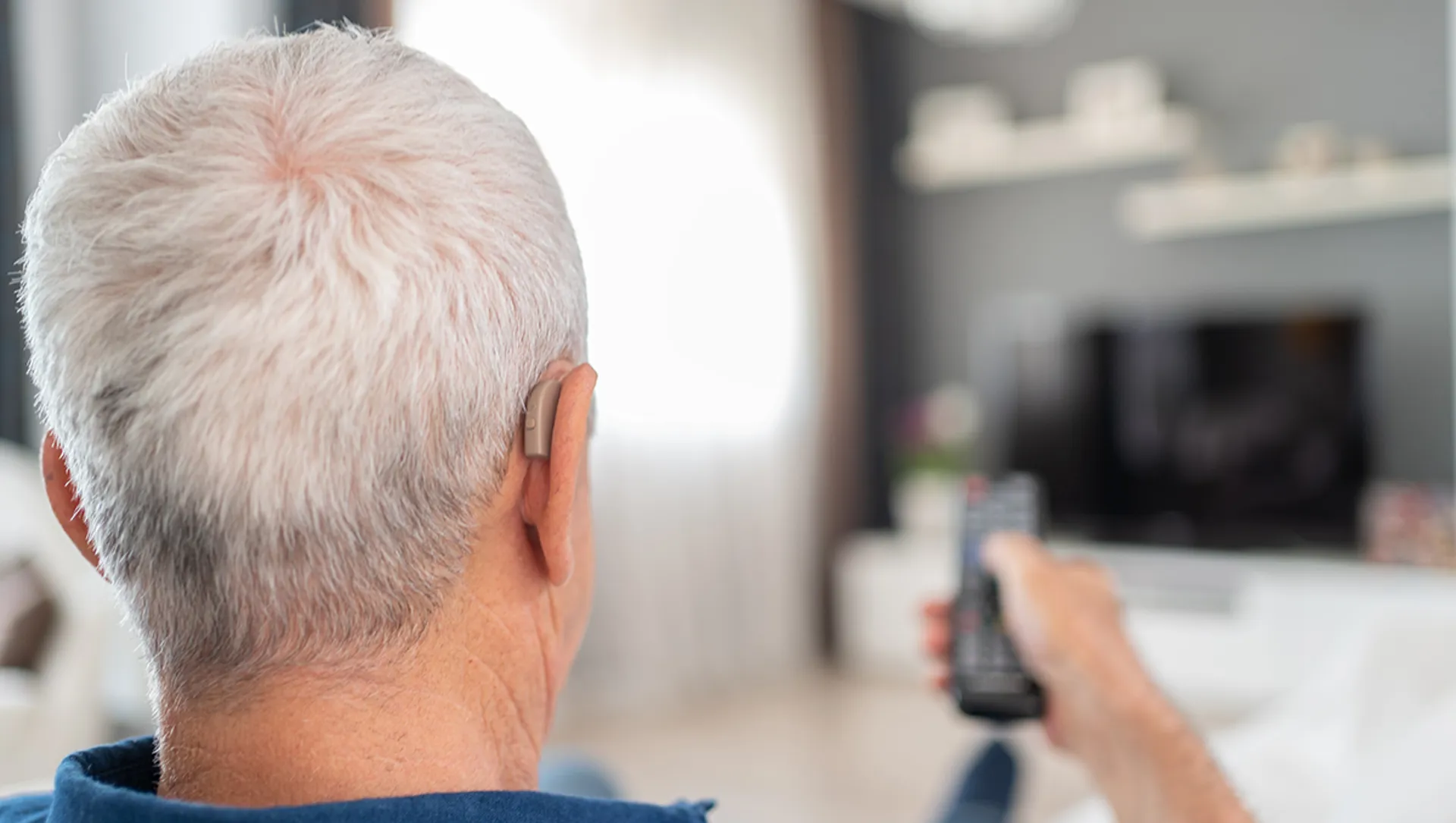
Access to television programs for people with disabilities in the Republic of Moldova remains limited, despite progress made in recent years. According to the latest monitoring report by the Broadcasting Council (BC), 28 of the 30 TV channels monitored failed to comply with the mandatory monthly quota for sign language interpretation. Representatives of organizations advocating for the rights of people with disabilities point out that many programs, including films and entertainment shows, remain inaccessible, while broadcasters cite a lack of financial resources, interpreters, and technical difficulties. Media Azi spoke with representatives of the regulatory authority, civil society, and newsrooms to find out what prevents audiovisual content from becoming accessible and what solutions are being considered.
In a comment for Media Azi, Galina Climov, Executive Director of the Alliance of Organizations for Persons with Disabilities (AOPD), says that only some TV channels provide sign language interpretation, usually for certain news broadcasts. Although the organization lacks the resources to assess the entire range of television programming, the AOPD representative notes that access to audiovisual content remains limited, particularly for people with hearing impairments. “In this situation, entertainment programs and films broadcast on television remain inaccessible,” Galina Climov says.
Current legislation establishes a number of obligations for audiovisual media service providers. According to the Audiovisual Media Services Code, national and regional broadcasters must air at least one news program per day accompanied by sign language interpretation or subtitles synchronized with spoken content. They must also provide at least 60 minutes of programming with sign language interpretation each month and inform the public about the broadcast of accessible content. The regulations also establish technical requirements for the presentation of these programs. Subtitles must be legible, synchronized with spoken content, and positioned so that they are not obscured by other graphic elements. In the case of sign language interpretation, the image showing the interpreter’s face and hands must occupy at least one-third of the screen, on the right-hand side.
Although the AOPD has not received individual complaints regarding the accessibility of TV programs, the alliance’s member organizations have requested intervention from the Broadcasting Council, including to ensure access to messages communicated during emergencies. “Accessibility standards need to be regulated to establish uniform requirements for all broadcasters,” the AOPD Executive Director believes. She also emphasizes the need to provide TV channels with resources to adapt their programming and to train newsroom staff.
ONLY TWO TV CHANNELS PROVIDE ONE HOUR OF SIGN LANGUAGE INTERPRETATION PER MONTH
On September 29, 2026, the BC announced that all 30 national and regional TV channels monitored during July 2026 had been notified of their failure to comply with accessibility requirements. Of these, 18 were sanctioned. More specifically, 13 television channels received public warnings, while another five were fined a total of 7,000 Moldovan lei.
According to the BC report, 28 channels failed to provide the mandatory minimum of 60 minutes of programming with sign language interpretation per month. Only Moldova 1 and TVR Moldova met this quota. However, on both channels, the interpreter’s image occupied less than one-third of the screen, contrary to regulatory requirements. Furthermore, some channels broadcast news bulletins without subtitles or sign language interpretation, while others failed to meet subtitle legibility requirements. Tatiana Crestenco, a member of the BC, says that sign language interpretation remains the most vulnerable area. “Most audiovisual media services cite a shortage of certified interpreters, technical complexity, and financial constraints,” she tells Media Azi.
Nevertheless, according to the BC member, the latest monitoring exercise revealed progress in broadcasters’ compliance with their responsibilities. “Comparing data from 2024 and 2026, the number of channels providing legible and properly positioned subtitles increased from 11 to 20. Compliance with the requirement to inform the public in advance through verbal announcements and static on-screen notices increased from six to 18 television channels. This shows that broadcasters have understood the importance of guiding viewers with hearing impairments toward accessible audiovisual programs,” Crestenco explains.
The regulatory authority’s representative also emphasizes that some private regional channels, such as Elita TV, Drochia TV, and Studio-L, have demonstrated compliance with subtitle and public information requirements, while some television channels have strengthened partnerships with specialized organizations. “For example, Realitatea TV established a cooperation partnership with the Republican House of Culture of the Deaf.”
The BC has not received individual complaints regarding access difficulties, Crestenco notes, but has discussed these issues with civil society representatives. “During my first year in office, we received a request from representatives of the Association of the Blind, the Association of the Deaf, and the INFONET Alliance, who informed us about the challenges faced by people with visual and hearing impairments in accessing audiovisual programs. Since then, we have maintained an ongoing dialogue with representative organizations, and the regulation on audiovisual content was finalized in direct consultation with the INFONET Alliance and the Association of the Deaf of Moldova,” Crestenco adds.
NEWSROOMS SEEK RESOURCES TO MAKE PROGRAMS ACCESSIBLE
Tatiana Vlas, Acting Deputy Director General of the public broadcaster Teleradio-Moldova (TRM), responsible for television, says that accessibility is part of the institution’s mission. “At Moldova 1, audiovisual content accessibility is both a legal obligation and a responsibility of the public service broadcaster toward its viewers. The public channel provides approximately 600 minutes of accessible news programming per month, ten times the minimum required by the Code,” Vlas explains.
She also notes that the national television channel recently increased the area allocated to the sign language interpreter to one-quarter of the screen. However, this remains below the regulatory threshold of at least one-third. “Implementing the regulatory requirement for the interpreter to occupy at least one-third of the screen also raises an issue of visual balance. The interpreter must be large enough for gestures to be clearly visible without compromising legibility or the composition of the television frame. Such a solution deserves to be examined together with the Broadcasting Council, in the interest of both accessibility and the quality of audiovisual presentation,” the TRM representative explains.
At TV Nord, a former television channel that now operates online, adapting content depends on the resources available through projects carried out with specialized organizations. Viorica Bugulean, the newsroom’s director, says that materials intended for people with hearing and visual impairments have been produced, but such initiatives are sporadic. “The costs of producing this type of content are quite high. If there are no projects to cover the expenses, we would not be able to afford it,” the director explains. Partners also help distribute the content to the people for whom it was created. Bugulean emphasizes that accessible content achieves its purpose when it reaches its intended audience, not merely when it is produced and published.
Improving access to information is also among the objectives of the new national program on the inclusion of people with disabilities, approved by the Government for the period up to 2030. The plan provides for revising the regulatory framework governing interpretation services for people with hearing impairments by 2027, launching an online platform for these services in 2028, and training 10 interpreters annually between 2028 and 2030. The authorities also aim to approve minimum accessibility standards for official websites and gradually adapt the websites of public institutions.
Meanwhile, amendments to the Audiovisual Media Services Code, approved by Parliament on Thursday, October 29, in the third reading, require media service providers to report annually to the BC on the measures taken to improve the accessibility of their services. The reports are expected to include information on sign language interpretation and subtitling and will also be published on the providers’ websites.