
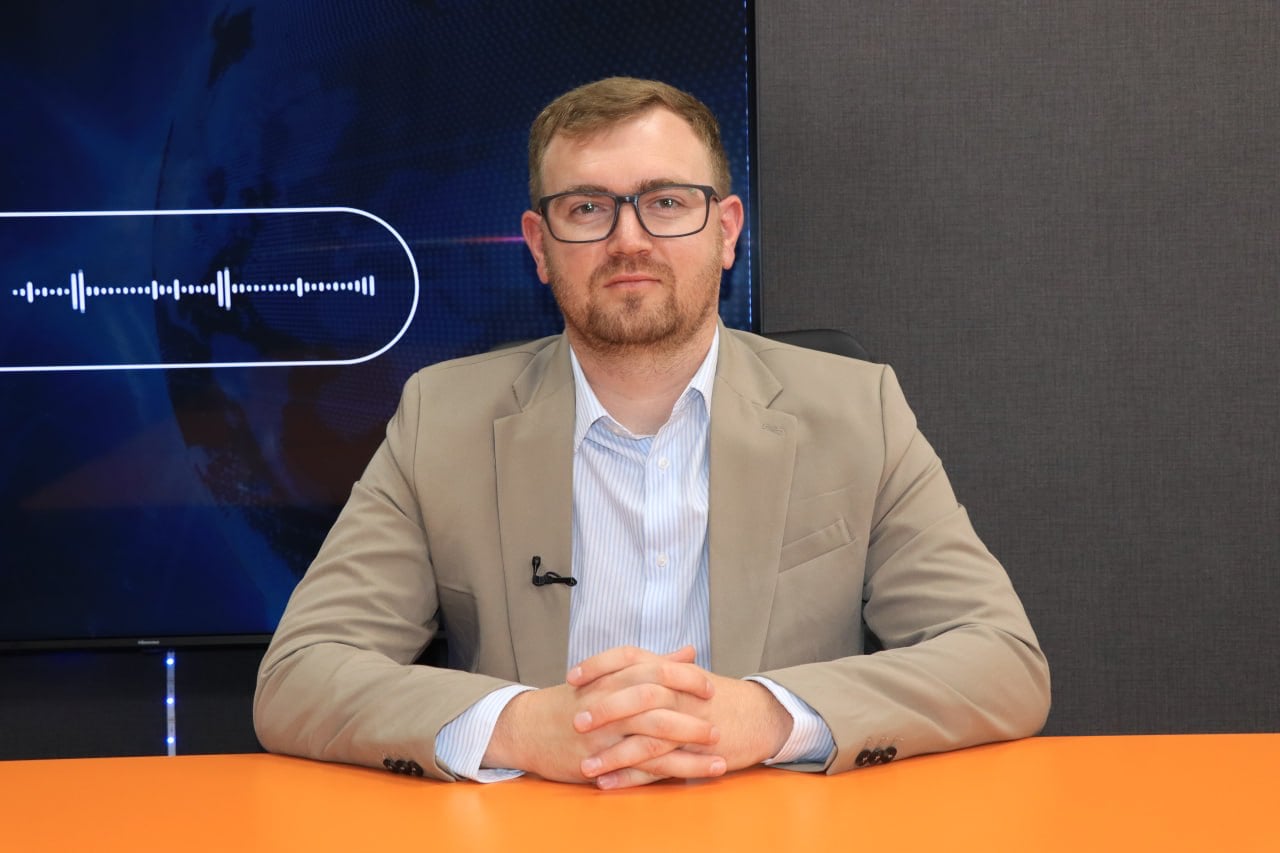
Petru Garciu, freelance journalist
The activity of the regional public broadcaster Gagauziya Radio Televizionu (GRT) can be described by the phrase “from election to election.” Regional elections, of course. This is because politicians in the autonomy quickly understood just how important it is to control the media landscape. Moreover, many of them do not tolerate criticism. As for news reports, these are expected to follow the finest traditions of the Soviet era: a leader visits a collective farm, while a journalist reports on milk production and how happy people are to live and work on the farm. Of course, these are all figurative examples.
The question of who determines GRT’s editorial policy — journalists or the regional authorities — remains relevant. After each election, the autonomy’s new political elites have an opportunity to influence the broadcaster’s activities through its Supervisory Board, whose members were appointed by a vote of the People’s Assembly of Gagauzia (PAG). This gave local authorities a permanent instrument of influence over the broadcaster. In turn, the Supervisory Board elected by the assembly members appointed GRT’s director and approved its editors-in-chief.
Such a system fosters fear among GRT journalists: fear of becoming inconvenient, producing a report that displeases those in power, asking the wrong question and, ultimately, losing their jobs.
Today, another risk has been added to these concerns — that of receiving yet another fine from the Broadcasting Council. During the period when GRT was headed by Vasilii Dermenji, who was associated with Ilan Shor’s structures, the broadcaster was repeatedly fined, including for violating requirements concerning the accuracy and impartiality of information. In total, the broadcaster spent several hundred thousand Moldovan lei paying these fines.
In October 2025, GRT was also removed from the Register of Signatories to the Journalists’ Code of Ethics of the Republic of Moldova. The decision was prompted by systematic violations of professional standards, including one-sided coverage of events, political bias and the dissemination of inaccurate information.
Following the departure of the management associated with Shor’s structures, GRT has been attempting to improve its practices. From my observations, positive changes are evident both in news coverage and in efforts to ensure impartiality in its programmes.
At the same time, the actions of some journalists associated with the broadcaster continue to cast a shadow over its reputation. For example, Nina Dimoglo, the host of GRT’s programme “Большая игра” (“The Big Game”, translated from Russian, editor’s note), promotes one of the candidates for the position of Bashkan, Fiodor Gagauz, on her Facebook page. Dimoglo herself also ran in the 2019 parliamentary elections on behalf of the Shor Party (declared unconstitutional in 2023, editor’s note).
COVERAGE OF THE ELECTION CAMPAIGN
This year, two election campaigns are taking place simultaneously in Gagauzia: one to elect the Bashkan and another to elect members of the People’s Assembly. GRT is organising debates between candidates for the PAG and has announced that it will also hold debates between candidates for Bashkan. From a logistical perspective, this is no easy task: 135 candidates have registered to contest the People’s Assembly elections across 35 separate electoral constituencies.
There have also been some awkward moments. During a debate between candidates in constituency No. 5 in Ceadîr-Lunga, one of the participants, Dmitri Chiseev, began criticising the regional authorities while presenting his electoral programme:
“This year, Gagauzia has effectively lost three main pillars. First of all, the Bashkan of Gagauzia was removed from office this year by members of the People’s Assembly…”
“Dmitri, please, let us focus more on your platform and refrain from assessing the activities of the regional authorities. If you continue talking about what happened in Gagauzia… Please speak only about your platform and move straight to presenting it, otherwise we will have to switch off your microphone,” the debate moderator interrupted him.
AMENDMENTS TO THE AUDIOVISUAL MEDIA SERVICES CODE — AN OPPORTUNITY TO FREE GRT FROM POLITICAL INFLUENCE
Amendments to the Audiovisual Media Services Code of the Republic of Moldova, adopted by Parliament in the third reading on 29 October, aim, among other things, to reduce political influence over the broadcaster.
The new provisions change the procedure for appointing GRT’s leadership. Under the amendments, the next Supervisory Board, consisting of five members, will be selected through an open competition by the Audiovisual Council of the Republic of Moldova, rather than by the People’s Assembly of Gagauzia. The Supervisory Board will subsequently appoint the broadcaster’s director for a seven-year term, with no possibility of reappointment for a second term. Meanwhile, the current Supervisory Board will continue to operate until the expiry of its mandate, at which point the mandate of the director appointed by that board will also end.
GRT will continue to be funded from Gagauzia’s budget. The law will enter into force six months after its publication, while a provision requiring the annual indexation of the budget subsidy allocated to the broadcaster in line with increases in consumer prices will apply from 1 September 2027. This applies strictly to the subsidy allocated from the autonomy’s budget, not to all of GRT’s revenue.
The People’s Assembly of Gagauzia will be required to allocate the necessary funds in the budget. However, the prospect of losing its authority to appoint the Supervisory Board has sparked dissatisfaction among PAG representatives. Previously, Gheorghi Leiciu, then Deputy Chairperson of the PAG, stated during GRT’s programme “Обсуждаем вместе” (“Discussing Together”, translated from Russian, editor’s note) that problems could arise with the allocation of funds.
“We are talking about Gagauz television and a number of other changes. At the same time, Gagauzia, the PAG, must allocate tens of millions every year to maintain this television broadcaster. Do you think Gagauzia will allocate this money? Obviously not,” Leiciu said at the time. He is currently running for a seat in the PAG.
It remains to be seen what position the newly elected People’s Assembly will adopt after the elections. Regardless of the election results, one thing seems clear: the willingness to fund GRT appears to depend on the extent to which the autonomy’s local political elites retain control over the broadcaster’s leadership.
The article was written within the project “Resilient Media, Informed Voters: Safeguarding Moldova’s Elections from Disinformation”, funded by the Embassy of the Kingdom of the Netherlands in Moldova. The views expressed are those of the authors and do not necessarily reflect the position of the donor.