
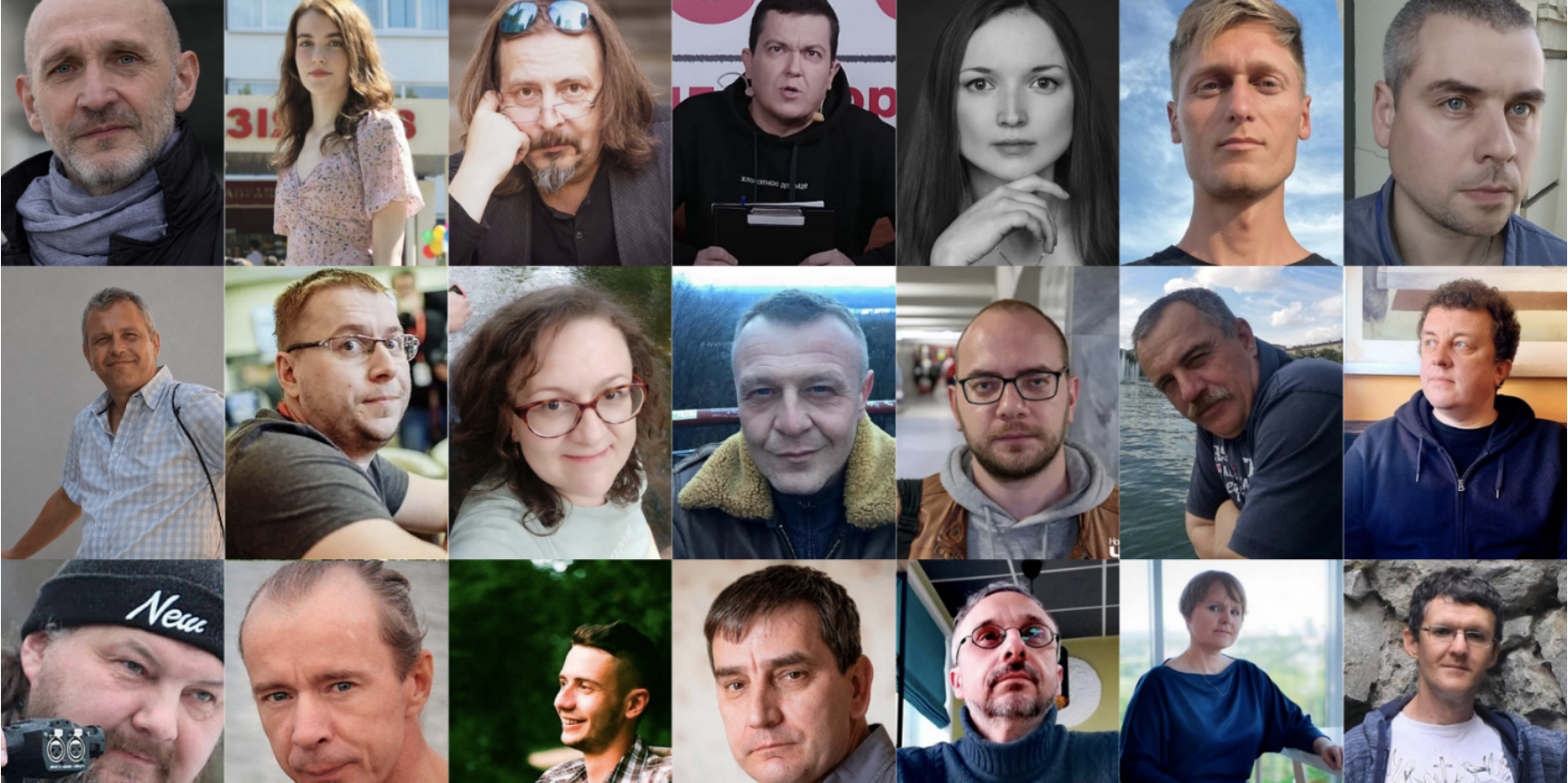
Repression against press freedom has intensified in Belarus, where 21 journalists and media workers are currently in prison on political grounds, according to the European Federation of Journalists (EFJ), which cites data from the Belarusian Association of Journalists (BAJ). In this context, the International and European Federation of Journalists (IFJ – EFJ) calls for an end to the prosecution of media representatives and for the immediate and unconditional release of all those imprisoned for carrying out their professional duties.
As the EFJ notes, since the Belarusian elections on 9 August 2020, President Alexander Lukashenko’s regime has stepped up pressure on opponents and repression against the press. Specifically, journalists in Belarus have been handed heavy prison sentences, whilst those who have been forced to leave the country continue to be intimidated and harassed. The crackdown also targets the Belarusian Association of Journalists (BAJ), which was designated an ‘extremist’ organisation in 2023. This is the only independent and democratic association of media representatives in Belarus.
Among the imprisoned journalists are those with serious illnesses or who are elderly, such as the journalist Kiril Pazniak, who was hospitalised in May with pneumonia and a concurrent Covid-19 infection whilst in pre-trial detention.
This year alone, six journalists were sentenced in the space of a single week. Uladzimir Yanukevich and Andrei Pakalenka, former editors of the regional newspaper Intex-Press, were sentenced to 14 years’ and 12 years’ imprisonment respectively for alleged ‘high treason’. Pavel Dabravolski was sentenced to nine years’ imprisonment on a similar charge, whilst radio presenter Aleh Khamenka received a three-year sentence for “collaborating with the media”. Journalist Tsina Palinskaia was sentenced to two years’ imprisonment, alongside her daughter, for alleged collaboration with an extremist organisation.
The persecution does not stop within the country’s borders. In recent years, the Belarusian authorities have actively persecuted journalists who have been forced to leave the country. Representatives of the BAJ report that criminal cases have been brought against them, searches have been carried out at their families’ homes, their property has been confiscated, and their names have been included on international missing persons lists.
As a result of political pressure, Belarusian journalists in exile are unable to renew their passports once they have expired and, consequently, face difficulties in the countries where they live, particularly in the European Union, Ukraine and Georgia.
“Despite all this, the independent media sector in Belarus remains highly effective and continues to play a significant role in shaping developments in the country. The independent press has a very large domestic audience, receives feedback from readers and is considerably more effective than the state media. We consider our main objective to be maintaining the effectiveness and competitiveness of the independent media sector. The BAJ is continuing its assistance and training programmes for journalists, providing legal assistance and supporting the independent press community,” states a BAJ press release sent to the European Federation of Journalists.
For their part, the European Federation of Journalists and the International Federation of Journalists have stated that “the Lukashenko regime not only prevents journalists from doing their jobs and violates the public’s right to information by intimidating, prosecuting and imprisoning them, but also violates the most fundamental civil rights of journalists and media workers who are in prison or in exile. We reaffirm our firm support for the Belarusian Journalists’ Association and for journalists in Belarus, and call for an end to their criminalisation and harassment. We also call for the immediate and unconditional release of all journalists and media workers currently in detention”.
Media Azi previously reported that, from 2021 to the present, the number of countries from which journalists have been exiled has doubled. More than 1,400 media representatives from at least 65 countries have been forced to leave their homes due to threats, wars, political repression or the risk of detention, according to Reporters Without Borders. Russia is among the countries responsible for the highest number of cases of exile, followed by Afghanistan and Myanmar.