More Romanian-language content and domestic production in the audiovisual sector. What changes does the new draft amendment to the CSMA propose?
Mihaela Ciobanu

Television broadcasters in the Republic of Moldova could be required to broadcast more programmes in Romanian and to increase the proportion of domestic productions, while media service providers could be required to include more Romanian-language channels in the packages offered to subscribers. These provisions are included in a draft amendment to the Code of Audiovisual Media Services (CSMA), which also proposes new rules on the protection of minors, the jurisdiction of media service providers, compliance with international sanctions and the status of the Gagauz autonomy’s regional public media service provider.
MORE PROGRAMMES IN ROMANIAN AND LOCAL PRODUCTIONS
According to the draft, television broadcasters will be required to broadcast, between 06:00 and 24:00, at least 50 per cent of programmes in Romanian or dubbed or subtitled in Romanian. An exception applies to channels aimed at communities where an ethnic minority constitutes the majority in the relevant administrative-territorial unit.
The draft bill provides for an increase from 10 per cent to 20 per cent in the quota for musical works by composers and artists from the Republic of Moldova. The 30 per cent quota for programmes in Romanian will remain unchanged.
The initiative also introduces a quota of at least 5 per cent of weekly broadcasting time for audiovisual works created by independent producers from the Republic of Moldova. News, sports programmes, advertising and teleshopping are excluded from this calculation. The requirement does not apply to radio broadcasting, private local and regional television channels, news channels, or channels dedicated to sport or advertising.
The draft also increases the quota for European audiovisual works created by independent producers to at least 10 per cent of weekly broadcasting. At least 50 per cent of these must have been produced within the last five years.
60% ROMANIAN-LANGUAGE SERVICES IN DISTRIBUTORS’ PACKAGES
Under the initiative, the minimum proportion of television services in Romanian, or with Romanian subtitles or dubbing, in cable and satellite distributors’ packages will rise from 50 per cent to 60 per cent. Television services from providers outside the jurisdiction of the Republic of Moldova, which have an audio track in a language other than Romanian, may not exceed, for each language individually, 30 per cent of the total number of services distributed via the respective network.
NEW RULES ON JURISDICTION
Under the draft, media service providers will be required to inform the Broadcasting Council (BC), within 15 days, of any change that may affect the determination of jurisdiction. The initiative obliges the BC to draw up, publish and update the list of providers falling under the jurisdiction of the Republic of Moldova and to report periodically to the European Commission.
The draft also sets out rules for resolving conflicts of jurisdiction with European Union Member States, including in the case of video-sharing platforms.
GREATER PROTECTION FOR MINORS
The draft extends the requirements regarding the prohibition of incitement to hatred and violence to video-sharing platforms.
The draft prohibits the commercial use of minors’ personal data collected by service providers. This covers direct marketing, profiling and behavioural advertising.
ANNUAL REPORT ON ACCESSIBILITY
The draft bill will require media service providers to submit an annual report to the Broadcasting Council on the measures taken to ensure the accessibility of services for people with disabilities.
According to the draft bill, the report must include measures such as sign language interpretation and subtitling, and must also be published on the provider’s website.
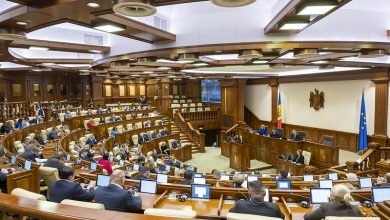
The need for such measures was also highlighted during the public consultations on the legislative initiative to amend the Code on Audiovisual Media Services, organised in Parliament by the Committee on Culture, Education, Research, Youth, Sport and the Media on 27 July.
Ruslan Lopatiuc, president of the Association of the Deaf of the Republic of Moldova, noted that one of the most pressing issues faced by people with hearing impairments is the failure to comply with the provisions of the audiovisual regulations, particularly those concerning the accessibility of media services.
“The regulations were adopted in 2022. Four years have passed since then, yet we have not seen the provision regarding increasing the size of the sign language interpreter’s image on screen implemented. Even if not up to a third of the screen, at least up to a quarter would already be a significant and important change for people with hearing impairments. A great many television channels use subtitles, which is a good thing. However, my suggestion is that people without hearing impairments should mute the sound and try to follow the programme using the subtitles alone. The language of people with hearing impairments is sign language — they even think in this language,” he explained.
Furthermore, Viorel Zaporojan, a representative of the National Information and Rehabilitation Centre of the Association of the Blind, highlighted the difficulties faced by people with visual impairments when, during television programmes, contributions in another language are translated only via subtitles, which are inaccessible to people who are partially sighted or blind. “This is particularly noticeable in Romanian-language news programmes – when a foreign language is spoken, it is translated via subtitles, but there is no simultaneous interpretation. We understand that doing everything at once is impossible, but at least for the news. We believe it is possible there,” he explained.
EU MEDIA SERVICES MAY BE TEMPORARILY SUSPENDED
The draft introduces two distinct mechanisms for the temporary suspension of access to an individual service provided from a Member State of the European Union.
The first concerns serious breaches of the prohibition on hate speech, of obligations to protect minors, or situations that undermine or pose a serious risk to public health. The application of the measure requires that the provider has committed a similar offence at least twice in the last 12 months, that written notification has been given to the provider, the Member State concerned and the European Commission, that the right of defence has been respected, and that the opinion of the European Committee on Media Services has been sought.
The second mechanism applies where the provision of the service endangers national security, calls for the violent overthrow or alteration of the constitutional order, incites military aggression or armed conflict, or publicly instigates the commission of a terrorist offence. In this case too, the behaviour must have been repeated over the past 12 months and prior notification is required; however, in urgent cases involving a serious risk to public safety, national security or national defence, the Broadcasting Council may order the measure without these conditions being met.
In both cases, if the European Commission finds that the measures are incompatible with European Union law, the Broadcasting Council must order their immediate cessation.
ADVERTISEMENTS MAY NOT BE OVERLAYED ONTO CONTENT WITHOUT CONSENT
According to the draft, it is prohibited to alter or overlay advertisements, banners or other graphic inserts onto the content of a media service provider without the latter’s express consent.
Exceptions are limited to elements such as the interface, subtitles and public service announcements.
DISTINCT LEGAL STATUS FOR THE PUBLIC BROADCASTER IN GAGAUZIA
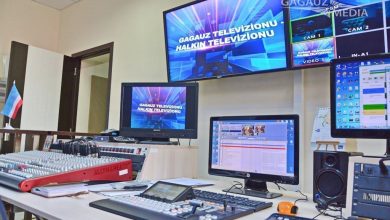
The initiative introduces, for the first time in the CSMA, a distinct legal framework for the regional public media service provider of the Autonomous Territorial Unit (UTA) of Gagauzia.
The draft provides for a seven-year term of office for the director, selected through a public competition, as well as rules governing the Management Committee and the five-member Regional Supervisory Board. It also sets out the terms of reference, funding from subsidies from the Gagauzia Autonomous Territorial Unit (UTAG) budget and own revenue, as well as accountability and reporting mechanisms.
PROVIDERS WILL CHECK FOR INTERNATIONAL SANCTIONS
According to the draft, media service providers and distributors will check, prior to concluding contracts, whether the services or content originate from persons or entities subject to international sanctions applicable in the Republic of Moldova.
Supporting documents will be retained for five years, and in the event of a breach, broadcasting will be suspended immediately, under the supervision of the Broadcasting Council.
INSPECTIONS AND CO-OPERATION WITH EU AUTHORITIES
The draft sets out the powers of the Broadcasting Council during inspections, including access to documents, premises and electronic equipment. At the same time, the entities subject to inspection are entitled to a right of defence, access to the case file and the right to present evidence.
The draft also introduces a mechanism for cross-border cooperation with regulatory authorities in other European Union Member States, including in cases where providers establish themselves in another Member State to circumvent stricter rules applicable in the Republic of Moldova.
NEW DEFINITIONS IN THE AUDIOVISUAL CODE
According to the initiative, the CSMA includes the definition of ‘non-linear audiovisual media service’, which refers to on-demand access to films, videos or programmes.
The draft also updates the definition of a linear service and that of disinformation, the latter being limited to the deliberate dissemination of false information that may harm public order or national security. The concepts of ‘local programmes’ (subsequently renamed ‘in-house programmes’ by the amendment to Article 4) and ‘user interface’ are also introduced.
THE LAW ON INVESTMENTS OF IMPORTANCE TO STATE SECURITY IS ALSO AMENDED
The initiative also provides for the amendment of Law No. 174/2021 on the mechanism for reviewing investments of importance to state security.
The draft introduces the definition of ‘imminent danger of irreparable harm’, with the aim of limiting the authorities’ discretion through objective and verifiable legal criteria. According to the explanatory memorandum, the requirement was formulated by experts from the Council of Europe and the European Commission.
THE BILL FOLLOWS THE 2025 AMENDMENT TO THE CSMA
The initiative follows the far-reaching amendment to the Audiovisual Media Services Code, adopted by Parliament on 10 July 2025 at second reading. That reform aimed to strengthen the independence of the media and protect the public interest, and introduced, amongst other things, the concepts of ‘editorial decision’, ‘audience measurement’ and ‘hate speech’.
According to the draft, the current initiative continues and complements the 2025 reform. Among the objectives are the transposition of Directive (EU) 2018/1808, which updates Directive 2010/13/EU on audiovisual media services, as well as strengthening the presence of the Romanian language and domestic content in the audiovisual sector.
During the consultations in Parliament, the chair of the relevant parliamentary committee, Liliana Nicolaescu-Onofrei, emphasised that these adjustments are necessary to harmonise national audiovisual legislation with European standards. “The way in which we manage to ensure the compatibility of the Audiovisual Media Services Code with the provisions of the acquis communautaire—specifically, the provisions of the European Directive on audiovisual media services, determines and helps, first and foremost, audiovisual media services – but not only them – and the media in general to be able to participate in European projects, particularly the Creative Europe programme. And I believe we must all make every effort possible,” she said.
WHAT’S NEXT
The document is to be submitted to the Government for approval and an assessment of its compatibility with European Union legislation, as well as to the National Anti-Corruption Centre for an anti-corruption assessment.
If adopted in its current form, the provisions will enter into force on 1 January 2027, with the exception of those relating to the Republic of Moldova’s accession to the European Union, which will apply on the date the Treaty of Accession of the Republic of Moldova to the European Union enters into force.