
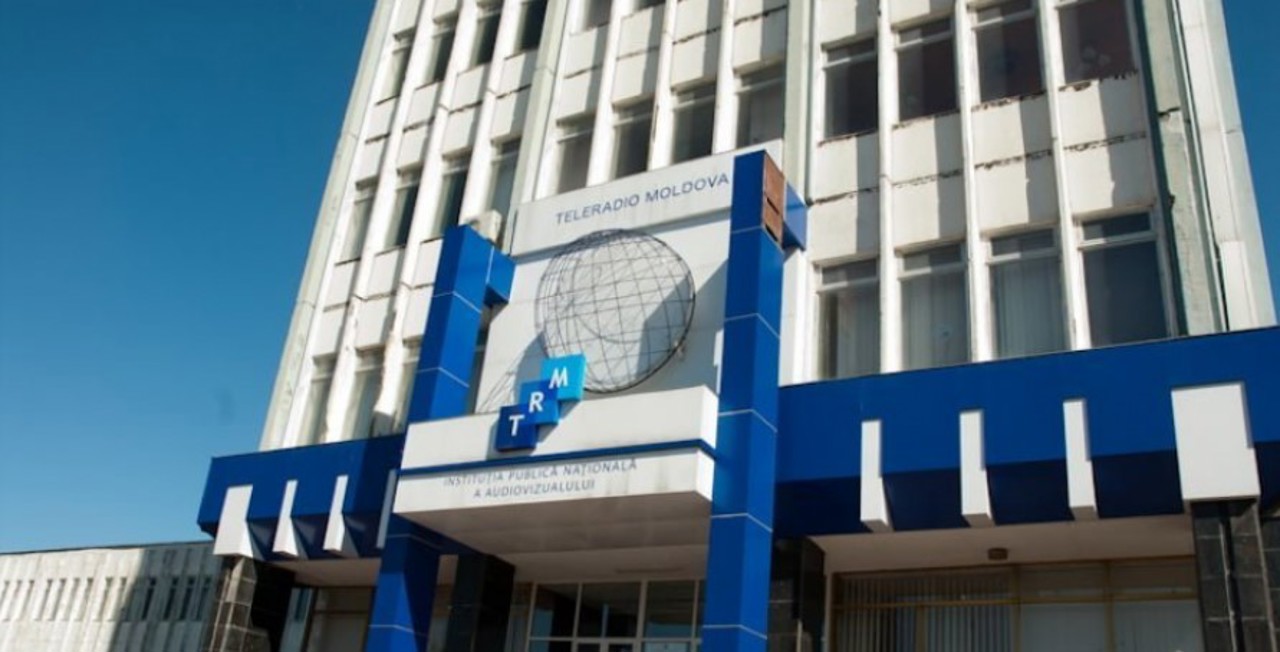
The public company Teleradio-Moldova (TRM), which is financed by approximately 90% from the state budget, also broadcasts commercial advertising since 2022. Managers of private television stations and experts in the field point out that this mechanism is unfair and disadvantages the entire media ecosystem. On the other hand, TRM representatives argue that the situation is justified and based on valid reasons.
A recent audit report by the Court of Auditors shows that in 2024, TRM was financed by approximately 90% of the total budget through state allocations, “which reflects a significant dependence on public funding,” according to the document. In 2022, with the amendment of the Audiovisual Media Services Code of the Republic of Moldova, TRM was given the explicit right to generate revenue from advertising. Until then, the public broadcaster was only allowed to broadcast commercial advertising during major events, such as the Eurovision Song Contest or football championships.
PRIVATE TELEVISION MANAGERS SIGNAL UNFAIR COMPETITION
Representatives of private television stations told Media Azi that TRM’s entry into the advertising market would be unfair, distort competition, and put the public broadcaster in a privileged position.
Mariana Rață, co-founder of TV8, describes the situation as “unfair and anti-competitive,” pointing out that public television has an annual budget larger than the entire advertising market and yet receives access to the same resources. She wonders what the legislator’s reasoning was when introducing the changes, pointing out that TRM directs considerable sums to salaries and questionable acquisitions, while the quality of its productions does not exceed that of independent television stations. “What kind of television is public television, actually? A commercial one or a public service one?” the journalist asks.
Adrian Buraga, general director of Jurnal TV, adds that “we do not think it is right or fair for TRM to be financed almost entirely from public funds and, at the same time, to compete in an already very small advertising market.” He recalls that objections were also raised in the parliamentary committee for the media and proposes solutions such as limiting advertising space or restricting certain types of products. “The public broadcaster should be financed exclusively from the state budget, and advertising revenues should go to private television stations, which need these resources to survive and develop,” Buraga concludes.
In the same key, Anca Butnariuc, director of One TV, recalls that “when this right was introduced for TRM, many of us complained that it was unfair,” pointing out that the institution already benefits from a substantial allocation from the state budget and, if that were not enough, then the public broadcaster should justify and request additional funds. She points out that the advertising market is shrinking, with budgets migrating online, and “if institutions subsidized from the public budget receive the same right, what market can those in the private sector operate in?”
TRM’S REACTION
On the other hand, TRM’s general manager, Vlad Țurcanu, argues that the change was made on the basis of well-founded reasons presented to Parliament. “One of the reasons was that TRM was isolated from the commercial market, in the sense that what is really important usually involves commercial agencies. That was our starting point, and then we came up with other reasons, such as the need for additional resources because TRM has outdated infrastructure,” he explains. Vlad Țurcanu also points out that advertising revenues are not high enough to become a main source of income for the institution. The TRM director acknowledges that the institution does not rely “entirely” on this right, but considers a grace period of three to four years necessary, during which time TRM can consolidate its infrastructure and eliminate internal vulnerabilities. “Then there will be no problem, as long as the institution is sufficiently funded by the state,” he says.
Arcadie Gherasim, chairman of TRM’s Supervisory and Development Council, told Media Azi only that when the right to broadcast advertising was removed, TRM lost 20 million lei, money that went to other television stations that appeared on the market. “The proposal to Parliament to reintroduce the right to advertise came from the SDC. End of story,” he said, without providing further details.
“TRM IS FAVORED FROM A COMPETITIVE POINT OF VIEW”
Media expert Alexandru Lebedev points out that the advertising market in the Republic of Moldova is “very small, volatile, and not very healthy,” especially in the television segment. “In 2024, approximately nine million euros went to television stations, and according to data and forecasts for 2025, this amount is decreasing, expected to be around seven million euros. Compared to TRM’s annual budget of around €10 million and advertising revenues of around €0.8-1 million, it appears that practically 1/7 of the money available for television stations on the market is absorbed by national television, thus reducing the development and sustainability potential of other players,” he argues.
In addition, the expert cites the example of the Baltic countries, where national television stations do not generate advertising revenue and rely on state funding to support market growth and development. “From a competitive point of view, TRM is favored, as it is not subject to market pressures and occupies the top positions among operators, which boosts its ratings,” Alexandru Lebedev points out. He also notes that, under these conditions, other television stations face difficulties in surviving, as they do not have sufficient resources to invest in quality local productions. “The only fair solution is either for other TV stations to receive state funding similar to that of TRM, or for TRM to withdraw from the advertising market. Continuing both scenarios in parallel disadvantages the entire media ecosystem,” he concludes.
PARLIAMENT’S ARGUMENTS
MP Liliana Nicolaescu-Onofrei, chair of the Parliament’s Committee on Culture, Education, Research, Youth, Sport, and Media within Parliament, argues that “according to the law, the state is obliged to ensure that ‘public media service providers have sufficient, sustainable, and predictable financial resources to fulfill their public service mission.’ And the mission, scope of activity, and responsibilities of public providers are much broader than those of private providers—see Chapter IV of the Audiovisual Media Services Code.”
The parliamentarian also points out that “TRM must have a sufficient budget to fulfill its mission and must manage it efficiently, transparently, and in accordance with legal provisions.” She also mentions that a recent publication by the European Audiovisual Observatory reveals that a funding mechanism similar to that in the Republic of Moldova is applied in eight of the 37 countries included in the study (such as Belgium, France, Slovakia, Latvia, etc.), and only in seven other countries is funding provided solely from the state budget. “There are countries that have even more complex mechanisms (taxes, subscriptions, advertising, and the state budget),” she explains.
Among other things, the Court of Auditors’ audit shows that, although TRM has created a methodological and accounting framework for setting the rates for the services it offers for a fee, it has not been applied correctly.
In its explanations, TRM states that the prices for broadcasting and production were set based on the advertising market situation and the average rates charged by competing television stations. In practice, these rates were calculated based on audience reports and public offers from other television stations.