
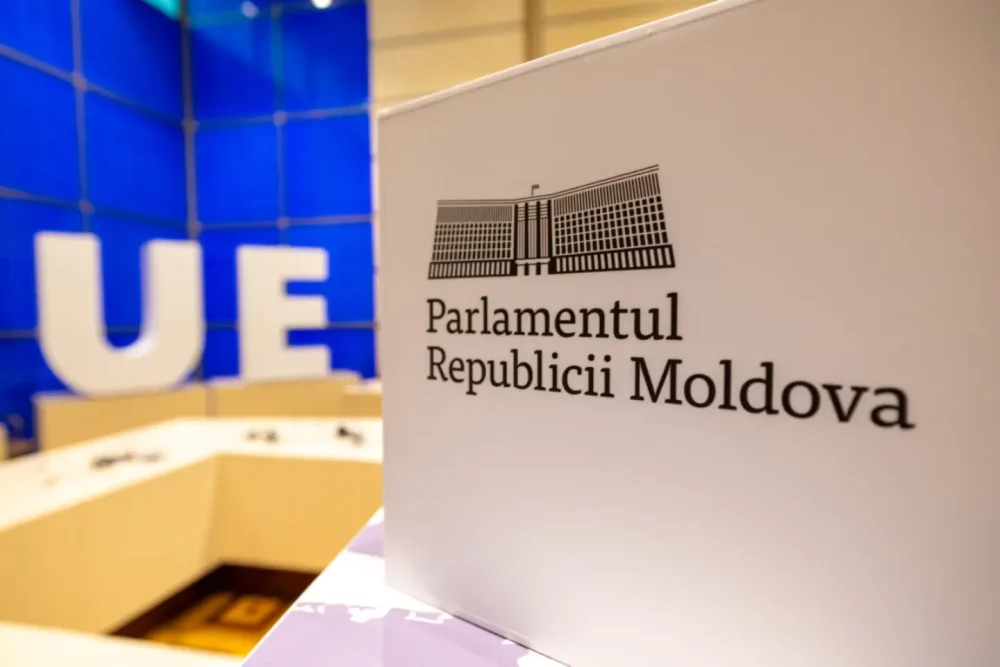
Several media organisations are calling on the Parliament of the Republic of Moldova not to undermine the essential safeguards of the anti-SLAPP mechanism, which was approved at first reading on 24 July 2026, before it is voted on at second reading. “At the same time, we call on MPs to refrain from making inaccurate or unverified statements that could jeopardise a reform essential to the journalistic community,” according to the statement issued by the Independent Journalism Centre and co-signed by five other NGOs.
Draft Law No. 268 on combating abusive legal proceedings against public mobilisation, which was examined and voted on 24 July, is described by experts in the field as a necessary legislative initiative to protect journalists, media organisations, activists, human rights defenders and other individuals involved in debates of public interest. Media Azi has also reported that the initiative transposes Directive (EU) 2024/1069, adopted by the European Parliament and the Council of the European Union in April 2024, and amends five legislative acts: the Law on Freedom of Expression, the Code of Administrative Offences, the Law on State-Guaranteed Legal Aid, the Law on State Fees and the Code of Civil Procedure. These amendments introduce several key measures to protect those subjected to abusive litigation.
In their appeal, the IJC and other signatory organisations point out that, during the examination of the legislative package at the plenary session of Parliament, some MPs made “inaccurate statements and erroneous interpretations” regarding the implementation of anti-SLAPP mechanisms in EU Member States, the content of the draft law and the proposal to repeal Article 70 of the Code of Administrative Offences, which penalises defamation. These “may mislead public opinion, distort the aim of the reform and pave the way for the dilution of essential safeguards ahead of the bill’s final reading”.
“The signatory organisations understand the reservations that new legal mechanisms may generate and acknowledge that, in the absence of adequate training for judges, anti-SLAPP safeguards could lead to their incorrect application. However, this risk does not stem from the content of the draft bill and does not justify the removal or dilution of the proposed safeguards. The issue lies in the state’s ability to strengthen the competencies of those involved in the justice system, to draw up practical guidelines and to ensure the monitoring of case law, so that these absolutely necessary mechanisms are applied consistently and uniformly. We call on the Parliament of the Republic of Moldova not to water down, during the second reading of the draft bill, the essential safeguards of the anti-SLAPP mechanism, including by abandoning the repeal of Article 70 of the Code of Administrative Offences, and to ensure effective consultation with media organisations, journalists and experts on freedom of expression prior to the adoption of the draft bill in its final reading”, the statement reads.
The anti-SLAPP legislative package was approved by the Government on 22 July. Previously, Media Azi explained in detail the European Union’s standards on the protection of public debate, the legislative gaps in the Republic of Moldova in this regard, and what would change in practice once the legislation is amended.