
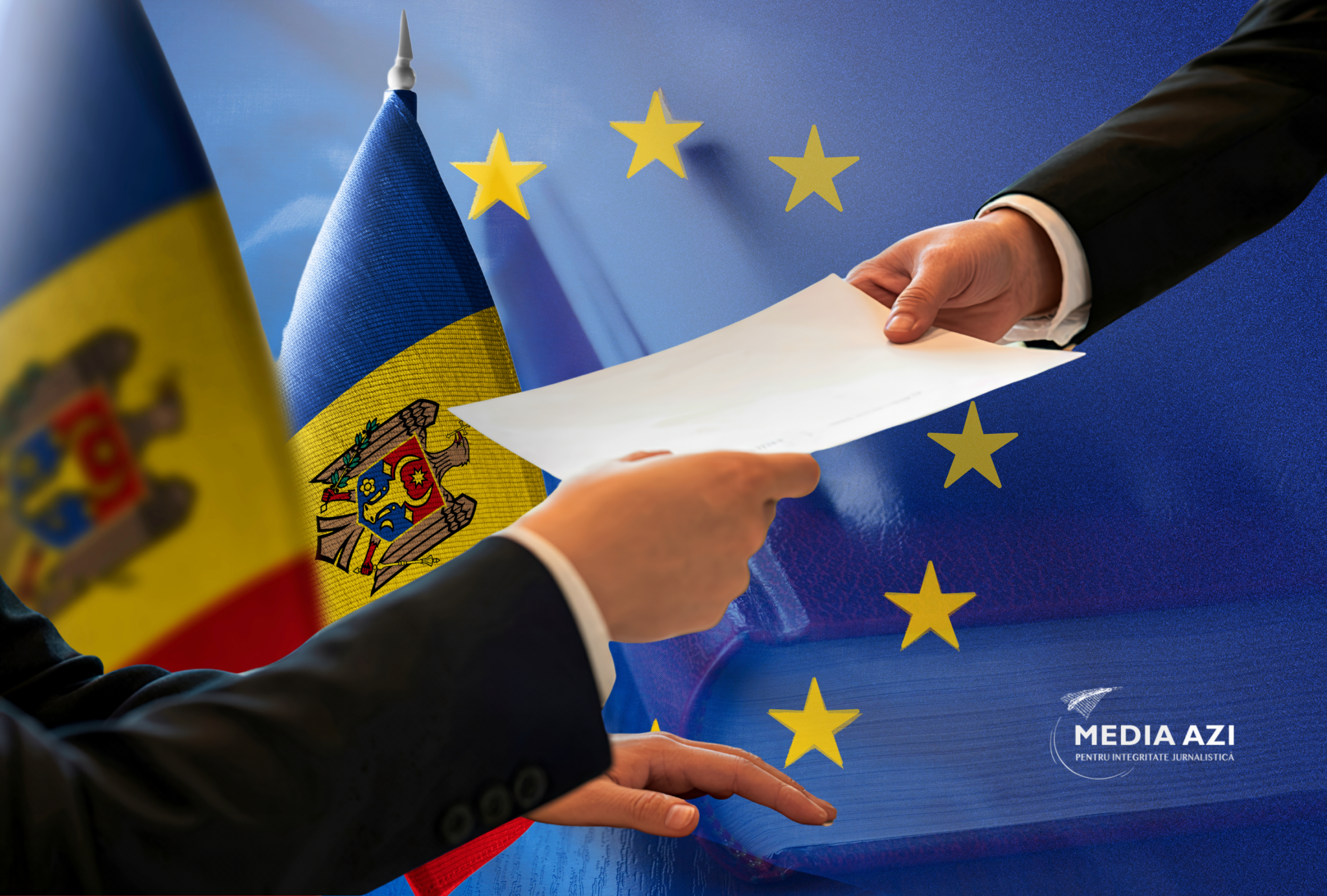
As a candidate country for European Union membership, the Republic of Moldova is required to gradually align its national legislation with EU standards, including the rules governing the media sector. The sector has evolved rapidly: a significant portion of content has moved online, and video services and digital platforms now compete directly with traditional television and radio stations for the public’s attention. In this ever-changing landscape, the Audiovisual Media Services Code (AMSC) has undergone several rounds of amendments over the years to respond to new realities and requirements. Even so, the process is not yet complete. Authorities acknowledge that further adjustments are needed so that the national framework is fully aligned with European standards and the commitments made during the accession process.
WHAT DO WE HAVE?
The Audiovisual Media Services Code is the framework law that establishes the rules governing the audiovisual market in the Republic of Moldova, as well as the powers of the regulatory authority — the Audiovisual Council (CA).
The Audiovisual Media Services Code was adopted in 2018 and has undergone several amendments since then. The most recent ones occurred in the summer of 2025, when Parliament adopted a package of amendments, publicly presented as part of the alignment with European standards and in response to recommendations from the Council of Europe, the Venice Commission, the OSCE/ODIHR, and the European Commission. The amendments to the CSMA adjusted the mechanism for appointing the leadership of the regulatory authority and the management of the national public broadcaster Teleradio-Moldova and “addressed” gaps identified in the screening process in relation to the new European Media Freedom Act. At the same time, recommendations from the EU Enlargement Reports for the Republic of Moldova were implemented. The package introduced new concepts such as “illegal content,” “editorial decision,” “audience measurement,” “trusted notifier,” etc. It redefined existing terms, strengthened the protection of minors through restrictions on advertising for unhealthy foods and age verification measures on digital platforms, and explicitly regulated video-sharing platforms, requiring them to protect minors and the public from pornography, violence, hate speech, and criminal content.
In addition, the CA may prohibit the retransmission of certain services from outside the jurisdiction of the Republic of Moldova in specific situations involving targeted advertising or teleshopping, and the Code provides clarifications regarding the protection of journalistic sources, freedom of reception, related restrictions, and the conditions for revoking licenses.
WHAT IS THE EU ASKING FOR?
With regard to the CSMA, the corresponding EU legislation is the 2010 Audiovisual Media Services Directive (AVMSD), as amended in 2018. The AVMSD establishes common rules for the audiovisual market, adapted to the digital age, including: the protection of minors; combating hate speech and illegal content; rules for video-sharing platforms and the independence of regulatory authorities, etc.
Another key piece of legislation is the European Media Freedom Act (EMFA), which will enter into force in August 2025. The EMFA aims to ensure that public and private media can operate in the EU’s internal market without barriers and without undue pressure, in the context of digital transformation and the cross-border flow of information, and its main provisions focus on protecting editorial independence, increasing transparency regarding media ownership, protecting media providers against the unjustified removal of content by very large online platforms, transparency in state advertising, and transparency in audience measurement.
In addition, the European Commission’s Annual Report on Enlargement remains a key reference point, as it includes recommendations (conditions) for the media sector. For Moldova, one of these concerns the protection of journalists, with particular emphasis on how law enforcement authorities investigate and prevent intimidation or attacks—that is, on the implementation of the existing framework, not necessarily on legislative changes. Another conditionality concerns ownership transparency for print and online media, an issue to be addressed by the new media law. The report also mentions the need to review the mechanism allowing for the revocation of television and radio station licenses under the law on strategic investments.
WHAT IS MOLDOVA DOING NOW?
According to the relevant authorities, an assessment by the European Commission is expected regarding the extent to which the Republic of Moldova has transposed the relevant audiovisual directive, and depending on the conclusions, it will be clarified which provisions are still missing and what needs to be incorporated into national legislation. Broadly speaking, the changes considered structural—related to the public broadcaster, the Audiovisual Council, and the rules for video-sharing platforms—have largely been implemented, and the discussion has now shifted to more technical additions that were not included in the previous draft for procedural reasons.
These include: reporting on any changes in the jurisdiction of providers, notification procedures to the European Commission, rules on the freedom to retransmit audiovisual services from EU member states and the conditions under which this may be restricted, including mechanisms for informing the Commission and the relevant European body, the promotion of self-regulation for certain types of commercial communications, as well as the exchange of information and institutional cooperation with the European Group of Regulators for Audiovisual Media Services, etc.
WHAT WILL CHANGE IN PRACTICE?
In practical terms, alignment with EU standards means that audiovisual regulations extend beyond television and radio to cover the digital sphere more clearly and specifically: updated definitions and obligations are introduced, and the regulatory authority is given more precise tools for oversight and enforcement. For the public, the change is reflected in stricter measures to protect minors (including restrictions on certain types of advertising and age verification requirements on platforms), explicit rules for video-sharing platforms (the obligation to restrict access to pornography, violence, hate speech, or illegal content), as well as more transparent procedures regarding the governance of key institutions in the sector (the Board of Directors and the public broadcaster), aimed at reducing the risk of political influence. At the same time, regarding the market and cross-border circulation, the alignment introduces clearer rules on retransmission, on the limited situations in which it may be restricted, and on cooperation and reporting to European mechanisms.
WHEN WILL IT COME INTO FORCE?
The deadline for the full transposition of the Audiovisual Media Services Directive is December 2026.
***
The Republic of Moldova in March 2022, obtained candidate country status in June of the same year, and accession negotiations were officially opened in June 2024. The accession process mainly consists of proving that our country can adopt and implement EU legislation (the EU acquis), a process structured around 33 thematic chapters in six areas such as justice, the internal market, the environment, and economic policies. For each chapter of negotiations, there are clear stages, recommendations, and indicative deadlines, and Moldova’s progress is constantly monitored by European institutions.