
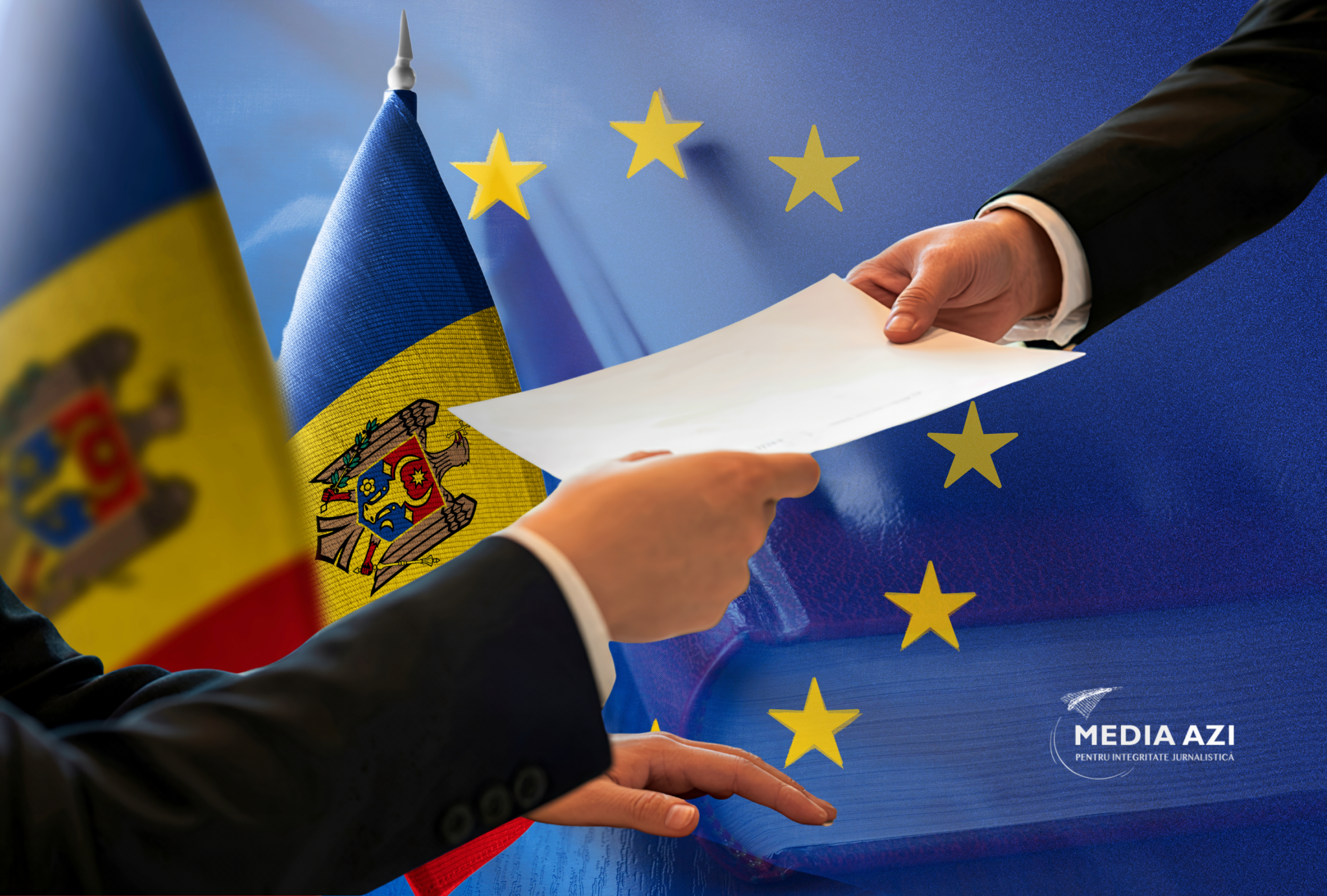
As a candidate country for European Union membership, the Republic of Moldova is required to gradually align its national legislation with EU standards, including in the areas of combating hate speech and hate crimes. In recent years, the authorities have taken several important steps: they have introduced and expanded regulations in criminal and administrative law, included the issue in public policy documents, and begun to develop monitoring and intervention mechanisms, including for the online environment. However, as more and more public communication shifts to digital platforms, and cases of hate speech circulate more rapidly and are harder to control, it becomes clear that the mere existence of rules is not enough. The current framework is relatively recent and first requires a period of implementation and evaluation; the definition of hate speech is not uniform across national legislation; and procedures for enforcement, data collection, and institutional cooperation still have gaps.
WHAT DO WE HAVE?
The Republic of Moldova is not starting from scratch in the fight against hate speech. The existing legal framework already covers part of this area. The Criminal Code defines “motives of prejudice,” treats them as an aggravating circumstance for 36 types of crimes, and penalizes various forms of hate speech, including incitement to violence motivated by prejudice, propaganda of genocide or crimes against humanity, the propagation of fascism, racism, and xenophobia, Holocaust denial, the display of discriminatory messages and symbols in public places, the desecration of graves and monuments, or vandalism.
The Code of Administrative Offenses also regulates this area. It, in turn, defines “motives of prejudice,” establishes them as an aggravating circumstance for eight types of misdemeanors, and penalizes, among other things, insult based on prejudice, defamation based on prejudice, incitement to discrimination, and hate speech or incitement to discrimination during election periods.
In addition to these two codes, hate speech is also regulated by other laws. The Audiovisual Media Services Code, for example, defines “hate speech,” penalizes the inclusion of discrimination and hate speech in audiovisual programs, and requires video-sharing platforms to take measures to protect the public from content that incites hatred, violence, or discrimination. The Advertising Law prohibits sexist advertising, the Equal Opportunities Law defines sexist language, and the Freedom of Expression Law contains provisions regarding “speech that incites hatred.”
WHAT IS THE EU ASKING FOR?
In its National Accession Program, the Republic of Moldova explicitly committed to taking measures to combat racism, xenophobia, hate speech, and hate crimes. These include criminalizing the liability of legal entities for racist and xenophobic offenses, in the context of transposing Council Framework Decision 2008/913/JAI of November 28, 2008, on combating certain forms and expressions of racism and xenophobia by means of criminal law, as well as measures to support the Roma population and the development of a new policy document on promoting Holocaust remembrance and a culture of tolerance.
The program also includes broader objectives, such as strengthening the capacities of law enforcement agencies, improving the collection of statistical data, and implementing information and awareness-raising measures. For some of these actions, it is not clearly specified who will implement them, by when, through what mechanisms, and with what resources. In other words, the direction is set, but the concrete tools are still insufficiently detailed.
At the same time, from the perspective of European standards and the digital reality, significant adjustments are still needed: clearer regulation of intermediary service providers, better procedures for preventing and combating online hate speech, more effective protection for victims, and a more coherent approach to hate crimes.
WHAT IS MOLDOVA DOING NOW?
In 2019, guidelines on the investigation and prosecution of hate crimes were approved and subsequently revised in 2025. In 2023, the Broadcasting Council adopted internal guidelines for monitoring hate speech in audiovisual programs. In 2024, the General Police Inspectorate approved an instruction on the identification and/or investigation of offenses committed on the basis of prejudice.
However, experts clearly indicate that these tools are insufficient. For example, neither the General Police Inspectorate’s instruction nor the General Prosecutor’s Office’s methodological guide clarifies exactly what types of electronic data must be stored during the documentation or investigation of an alleged case of online hate speech, nor how this evidence should be preserved. Yet, in cases involving digital platforms, comments, videos, or content shared online, it is precisely this technical aspect that can make the difference between a properly documented case and one that “falls through the cracks.”
There is also a practical issue regarding statistical data. For hate crimes, the records have been adjusted. For misdemeanors, however, they have not been modified, and data is collected manually. This means that the state does not yet have a sufficiently clear, consistent, and comparable picture of the phenomenon.
In this regard, strengthening cooperation between institutions is recommended. Specifically, the General Inspectorate of Police (IGP) should develop an inter-institutional protocol or guideline clarifying how reports regarding hate speech and/or incitement to discrimination are forwarded to the police by other institutions, such as the Audiovisual Council or the Central Electoral Commission. The aim is to avoid duplicate reporting and prevent the abuse of existing mechanisms. At the same time, it is proposed that certain police officers and prosecutors be specialized in documenting and investigating these cases.
WHAT WILL CHANGE IN PRACTICE?
In practical terms, the biggest change should be seen in how the government handles specific cases, especially online. Currently, the Republic of Moldova has points of contact with Meta, Google, and TikTok regarding certain types of illegal content, but there is insufficient transparency regarding the criteria authorities use to decide when to notify these platforms, nor regarding the reasons why certain content is classified as hate speech and flagged for blocking or removal.
This means that the next step is no longer just about “more laws,” but about clearer operating rules: how to document, how to classify, how to collect data, who intervenes, who decides, and on what basis. In the absence of these mechanisms, experts warn that there is a risk that similar cases will be treated differently or inconsistently from one institution to another.
WHEN WILL IT COME INTO FORCE?
The competent authorities have not set a single deadline for all the necessary changes, but they note that some measures are already being implemented as part of the National Program for the Republic of Moldova’s Accession to the European Union, and information and awareness-raising campaigns are planned for the period 2025–2029.
***
The Republic of Moldova in March 2022, obtained candidate country status in June of the same year, and accession negotiations were officially opened in June 2024. The accession process mainly consists of proving that our country can adopt and implement EU legislation (the EU acquis), a process structured around 33 thematic chapters in six areas such as justice, the internal market, the environment, and economic policies. For each chapter of negotiations, there are clear stages, recommendations, and indicative deadlines, and Moldova’s progress is constantly monitored by European institutions.