
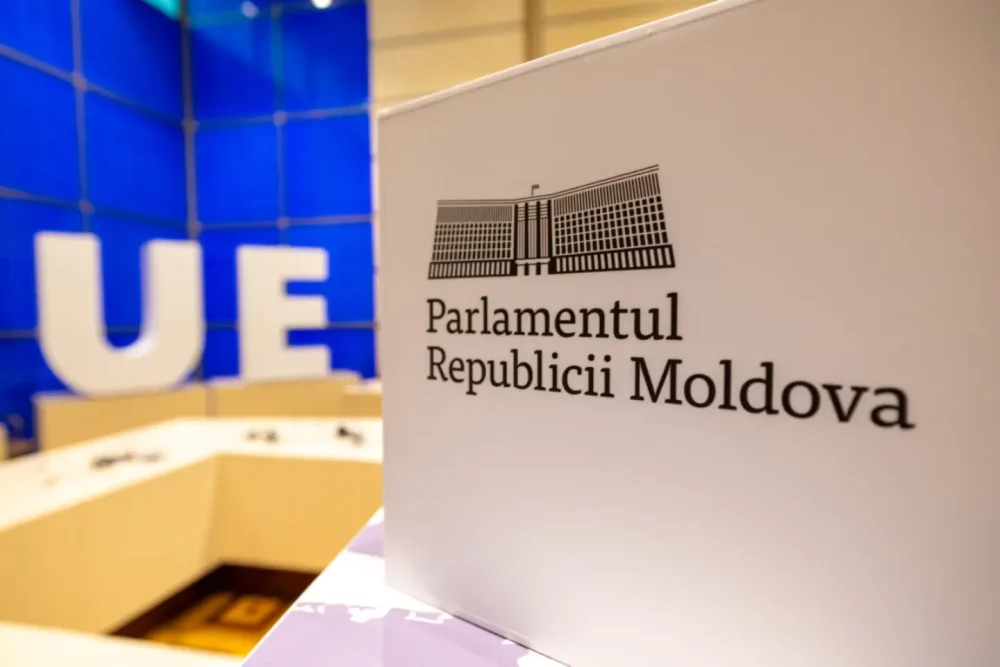
The draft media law,registered in Parliament in mid-April, introduces several new provisions and incorporates elements from the European Media Freedom Act (EMFA). Thus, the authorities aim to adapt the regulatory framework to developments in the field and promise to align it with European standards on press freedom, media pluralism, and media ownership transparency.
According to the authors, a new media law is necessary given the significant evolution of the sector in recent years, as the current Press Law was adopted in the early 1990s, when the media landscape was dominated by print media. “Technological developments and the transformation of how information is produced and distributed have created new challenges for the independent operation of media institutions. The growing role of digital platforms and other online intermediaries in the distribution of journalistic content, as well as structural changes in the media market, highlight the need to strengthen guarantees regarding editorial independence and the protection of journalistic activity against unjustified interference. “In the face of these changes, the current legislative framework does not ensure effective regulation,” the explanatory memorandum states.
Furthermore, it is necessary to align the national regulatory framework with European standards on press freedom, media pluralism, and media ownership transparency. Thus, the draft partially transposes provisions from Regulation (EU) 2024/1083, which establishes common rules for media services in the European Union, aiming to protect editorial independence, ensure ownership transparency, protect journalistic sources, and assess media concentration.
The initiative clearly states that the state must guarantee the media’s freedom of expression and that no one may prohibit or prevent the dissemination of information of public interest except under the conditions provided by law. “The editorial independence of media service providers is recognized and guaranteed by law. Censorship, in any form, is prohibited,” the bill stipulates. Furthermore, “coercion, intimidation, or the exertion of any pressure on a journalist for the purpose of influencing journalistic activity entails administrative or criminal liability, as applicable, in accordance with the law.”
At the same time, according to the text of the law, “media service providers are required to ensure transparency regarding their ownership structure and sources of funding.”
Regarding the safety of journalists, the draft legislation provides for their protection and safety, particularly in the context of acts of war, conflicts, protests, and demonstrations of any kind.
The draft law introduces a set of new provisions. First, it defines the main concepts relevant to the field, such as media pluralism, editorial responsibility, media service provider, and media market concentration. The law also introduces an explicit definition of “disinformation,” aimed at combating false or misleading information that may cause public harm, an aspect of direct relevance to the rapid circulation of digital content.
It also provides for the establishment of a registry of media service providers, which would be managed by the Ministry of Culture and, according to the drafters, be “voluntary in nature.” This would be intended for the administrative record-keeping of media service providers and to facilitate public access to information regarding the ownership structure and main sources of funding of media institutions. The authorities also aim to clarify the roles of public institutions involved in the media sector, particularly those of the Ministry of Culture, the Audiovisual Council, and the Competition Council.
At the same time, regulations for the online environment and the digital space are stipulated. The text defines for the first time the concept of “online platform” as a hosting service that stores and disseminates information to the public, thereby extending the traditional legal framework of the press to the digital environment. Furthermore, editorial responsibility is clarified by including the obligation to continuously verify content generated using artificial intelligence tools. The draft also sets out rules for transparency regarding the ownership structure and funding sources of media service providers, including those in the online environment, and strengthens the protection of privacy rights and personal data.
Previously, Media Azi explained in detail what practical changes the new press law will bring, what the European Union standards are in this area, and when the competent authorities estimate it could come into force.