Who are the 2026 “Press Freedom Predators”? RSF identifies 33 individuals and organisations
Mihaela Ciobanu
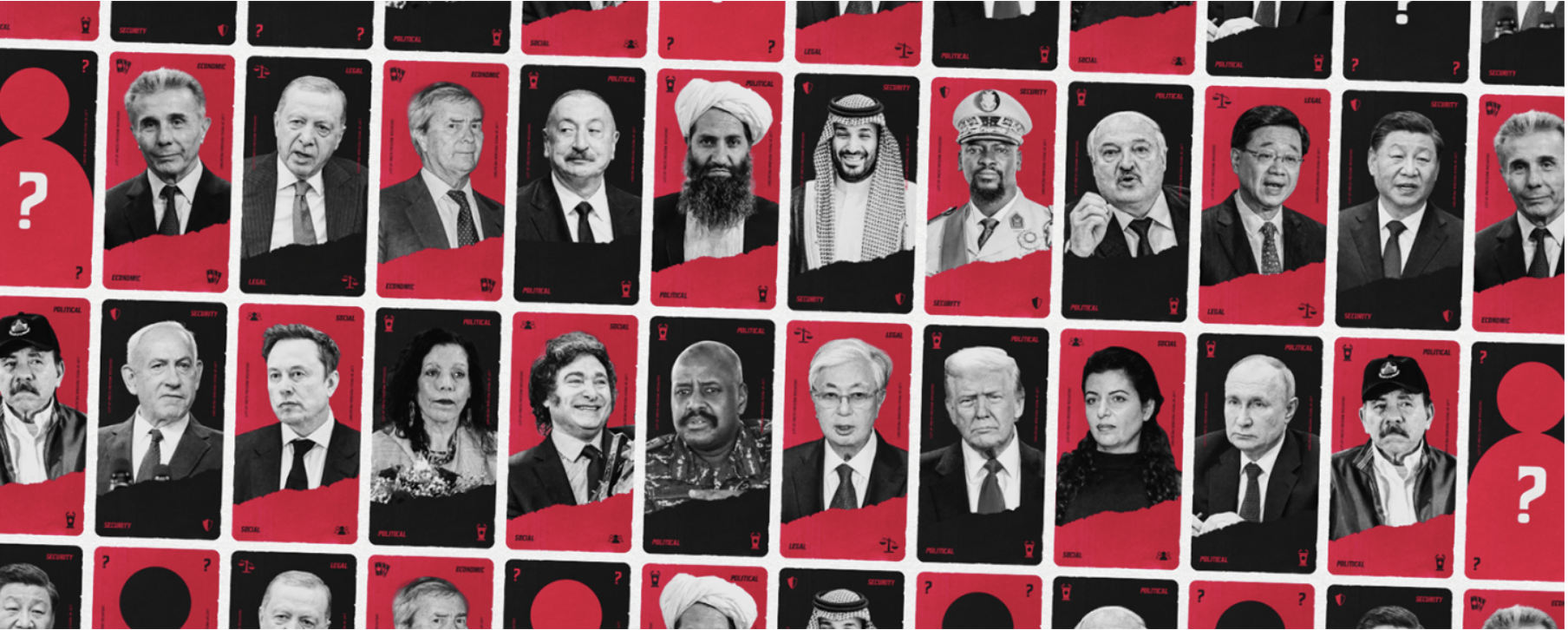
Reporters Without Borders (RSF) published a list of 33 individuals and entities it considers responsible for attacks on press freedom in 2026 on Monday, November 2, marking the International Day to End Impunity for Crimes against Journalists. The list includes political leaders, state institutions, technology companies, and criminal organizations. According to RSF, the methods used to silence journalists range from killings and detention to economic pressure, judicial harassment, and smear campaigns.
The new RSF list is divided into five categories of threats to press freedom: political, security-related, legal, economic, and social. Unlike the World Press Freedom Index, which assesses the situation in different countries, this selection aims to identify the actors RSF considers responsible for the deterioration of press freedom and the right to information.
Among those included on the 2026 list are Russian President Vladimir Putin, who has appeared on RSF’s list of “press freedom predators” since 2001, Belarusian President Alexander Lukashenko, and the Taliban leader in Afghanistan, Hibatullah Akhundzada.
A new addition to this year’s list is US President Donald Trump. RSF explains its decision by pointing to the intensification of attacks on the press during the White House leader’s second term. Among other concerns, the organization highlights restrictions imposed on journalists’ access. The United States ranks 64th in the global press freedom ranking.
The list also includes Slovak Prime Minister Robert Fico, Argentine President Javier Milei, American billionaire Elon Musk, owner of the X platform, and Margarita Simonyan, editor-in-chief of the Russian broadcaster Russia Today. They are included in the category of social threats, which involve discrediting the press and fueling public distrust of journalists.
The category of legal threats includes Turkish President Recep Tayyip Erdoğan, Russia’s communications regulator Roskomnadzor, and Kazakh President Kassym-Jomart Tokayev. According to RSF, these actors use or facilitate legal mechanisms that restrict the work of the press.
In the category of threats to journalists’ safety, the organization includes the Israeli armed forces, the Chinese Communist Party, and criminal cartels in Mexico. RSF reports that, since the beginning of 2026, organized crime in Mexico has caused the death of nearly one journalist per month on average. China remains the country with the highest number of imprisoned journalists. Egyptian President Abdel Fattah el-Sisi is also included in this category, amid the detention of journalists and the closure of independent media outlets.
The list also features two major technology companies: Alphabet, Google’s parent company, and Meta, which owns Facebook and Instagram. They appear in the category of economic threats, alongside Georgian billionaire Bidzina Ivanishvili and French businessman Vincent Bolloré. RSF warns that financial pressure can undermine editorial independence and newsrooms’ ability to continue operating.
“Although the list is subjective, it includes only leaders and organizations that, during a particularly turbulent year, have demonstrated a clear determination to target the media. Some individuals have disappeared from the list, and we will not miss them, such as Ali Khamenei (Iran), Nicolás Maduro (Venezuela), Viktor Orbán (Hungary), and Aleksandar Vučić (Serbia). But others are already ready to take their place. (…) Whether they resort to physical or verbal violence, legal abuses, intimidation, digital information manipulation, or economic pressure, these ‘predators’ pursue the same goal: to prevent journalists from doing their jobs and deprive citizens of information from independent sources,” RSF Director General Thibaut Bruttin emphasizes in a statement published on the organization’s website.