Jeanne Cavelier of RSF after the launch of the Press Freedom Index: “Moldova’s progress is real, but reversible”
Victoria Dodon
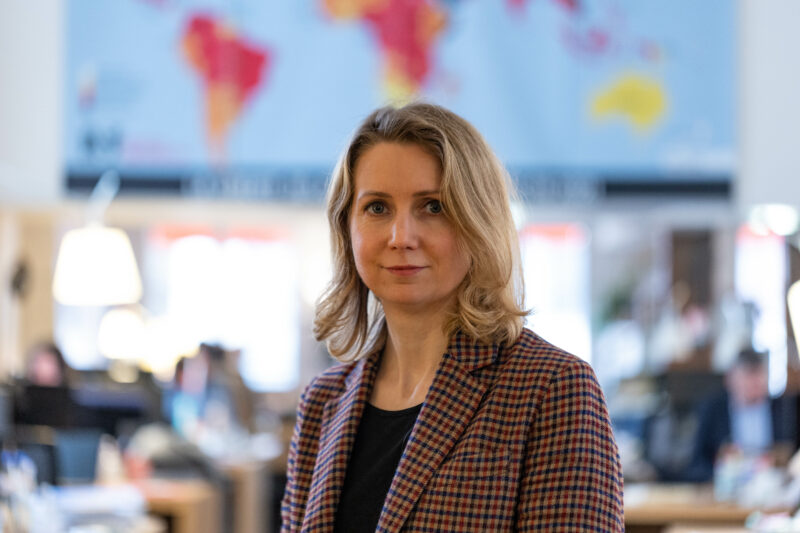
The Republic of Moldova’s rise in the 2026 World Press Freedom Index, launched by Reporters Without Borders on 30 April, “is real, but should be interpreted with nuance”, says Jeanne Cavelier, the organisation’s Head of Eastern Europe and Central Asia Desk. According to her, strengthening the financial sustainability of the media, ensuring genuine access to information for newsrooms and protecting journalists against pressure and attacks will be “decisive factors in determining whether Moldova consolidates its gains or loses ground in an increasingly hostile regional environment”.
According to the RSF representative, one of the factors that helped Moldova reach 31st place is a solid legal framework for the media. “Press freedom and access to information are enshrined in law, and recent legislative reforms have moved closer to European standards. This has translated into greater institutional autonomy for public broadcasters and a certain reduction in the level of political interference,” Jeanne Cavelier explained to Media Azi.
Another factor, in her view, is the “remarkable” resilience of independent journalism. In this context, the RSF representative refers to media products and journalistic investigations that played a decisive role, particularly in the run-up to elections, by exposing pro-Kremlin propaganda networks and information manipulation campaigns. “Several media outlets and organisations have stepped up their efforts to promote media literacy among different segments of the population, helping to strengthen resilience against disinformation,” the expert said.
“In addition, Moldova’s improved ranking also reflects a regional contrast effect. In Eastern Europe and Central Asia, press freedom indicators — particularly the legal framework — have declined sharply. Moldova stands out as the only country in the region still classified as being in a fairly good situation, highlighting both its progress and the broader regional regression.”
At the same time, Jeanne Cavelier warns of several challenges that need to be addressed urgently: “The most pressing issue is the economic vulnerability of independent media. In fact, of the Index’s five indicators, this is the weakest, with a score of only 60 out of 100. Many media outlets rely heavily on international funding, and recent cuts have affected their sustainability. This creates fertile ground for self-censorship and deepens inequalities vis-à-vis better-funded media, often politically aligned.”
She also refers to media polarisation, persistent oligarchic influence, even though the phenomenon has diminished recently, as well as problems regarding access to information, which remains “uneven, while abusive defamation lawsuits continue to be used as a means of pressure. Journalists also face intimidation, online harassment and coordinated smear campaigns, which affect their ability to carry out their work freely.”
“And we cannot ignore the situation in regions such as Transnistria and Gagauzia, where information is either tightly controlled or heavily influenced, creating grey zones in the country’s information ecosystem,” Jeanne Cavelier concludes, also pointing to the numerous external risks that significantly affect independent journalism and the media market in the Republic of Moldova.
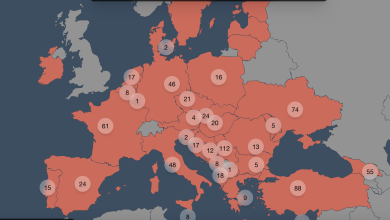
The Republic of Moldova has risen to 31st place, up from 35th in 2025, in the 2026 World Press Freedom Index. The country remains the only one in Eastern Europe where the state of media freedom is classified as “satisfactory”. Moldova ranks ahead of countries such as Romania, in 49th place, Ukraine, in 55th, the United States, in 64th, and far above Russia, in 172nd place, one of the most restrictive countries for journalists. As in previous years, the ranking is led by Norway, followed by the Netherlands and Estonia.